 ultimate-guide
Bulk Discount for Rental Property Rekeying: 2026 Guide
Table of Contents
- How Bulk Rekeying Pricing Works for Rental Portfolios
- Cost to Rekey Multiple Locks: What Drives the Number
- Rekeying vs Replacing Door Locks for Rentals
- Locksmith Service Agreement for Property Managers
- What to Look for in a Bulk Rekeying Discount
- Smart Locks, Insurance, and Long-Term Value
- Conclusion
- Frequently Asked Questions
Last Updated: September 15, 2026
How Bulk Rekeying Pricing Works for Rental Portfolios
A bulk discount for rental property rekeying is a reduced per-unit rate that locksmiths apply when a landlord or property manager authorizes several locks to be rekeyed in a single visit, rather than booking each unit separately. At Advanced Keys & Locks LLC, we quote these jobs as one project because the labor overlaps so heavily. The discount is real, but it is not automatic.
For a portfolio owner, the effect is straightforward: the more locks you commit to in one scheduled visit, the lower the cost per lock. The rest of this guide explains how to capture it without sacrificing security.
What Qualifies as a Bulk or Multi-Unit Job
Most locksmiths treat three or more locks at a single address as a multi-unit job (HOW TO HIRE A PROFESSIONAL). Some extend that to multiple properties within a short drive.
- Three or more units in one building
- Several doors within one commercial suite
- A mix of entry doors, back doors, and outbuilding locks on one site
- Repeat work scheduled in advance rather than called in as emergencies
The distinction matters because rekeying is labor-driven: once a technician is on site with the pinning kit and tools, the second lock takes a fraction of the time the first one did. That saved time is what the discount is drawn from.

Cost to Rekey Multiple Locks: What Drives the Number
The cost to rekey multiple locks depends on four variables: cylinder count, lock hardware type, whether locks are keyed alike, and travel distance. Hardware is usually the smallest line item, because rekeying reuses the existing lock body.
| Cost Driver | What It Means | Effect on Price |
|---|---|---|
| Cylinder count | Total locks to be rekeyed | Higher count lowers per-lock rate |
| Lock type | Knob lock, cylindrical, mortise, deadbolt | Mortise and high-security cost more |
| Keying plan | Keyed alike vs. master key system | Master keying adds labor |
| Access | Occupied vs. vacant units | Occupied units slow the job down |
| Travel | Distance between properties | Adds a service fee per trip |
Two terms matter before you request a quote. Rekeying means removing the existing pins from a lock cylinder and replacing them so the old key no longer works. Keyed alike means several locks accept the same key, which is usually what landlords want for a single building.
A common mistake is asking for a per-lock price before describing the job. Locksmiths price the visit, not the lock, so a vague request gets a vague number.
Rekeying vs Replacing Door Locks for Rentals
Rekeying is almost always correct for a rental turnover: the lock body is already installed and aligned with the strike plate, so you pay for labor and a new key set rather than new hardware.
Replacement becomes the better call in specific situations:
- The lock is damaged, loose, or has a worn cylinder
- You are upgrading from an entry-level knob lock to a graded deadbolt
- The existing hardware is so old that parts are no longer available
- You want to move to keyless entry or a smart lock
Across a whole portfolio, the deciding factor is usually lock age. A deadbolt in service for years may still function, but its internal tolerances have widened, and a rekey will not restore them.
Locksmith Service Agreement for Property Managers
A locksmith service agreement for property managers converts unpredictable per-call invoices into a defined rate structure: the per-lock rate for standard rekeys, the after-hours rate, and the response window you can expect.
What a useful agreement should specify:
- Per-lock rate at each volume tier
- After-hours and holiday service fee
- Response time commitment
- Whether key duplication is included
- Documentation provided after each job
- How new units are added to the agreement
The documentation clause is the one most managers overlook. You want a written record of which cylinders were rekeyed, what keyway was used, and how many keys were issued. Without it, the next turnover starts from zero.
ANSI/BHMA lock grading standards are the reference point for hardware quality in the United States, and a locksmith who can tell you the grade of the locks in your building is worth keeping.
What to Look for in a Bulk Rekeying Discount
A genuine bulk discount for rental property rekeying shows up as a lower per-lock rate at a stated volume threshold, not a vague promise of "good pricing." Ask for the tiers in writing, and what happens if your unit count lands between tiers.
How Volume Tiers Are Actually Structured
Most locksmiths build tiers around cylinders rekeyed in a single scheduled visit, where the labor overlap is greatest. A common pattern:
| Tier | Cylinders in One Visit | Typical Pricing Behavior |
|---|---|---|
| Single | 1 lock | Full service-call rate plus per-lock labor |
| Small multi-unit | 3-9 locks | Service call absorbed into a flat per-lock rate |
| Portfolio | 10-24 locks | Per-lock rate drops; keying plan included |
| Master account | 25+ locks, recurring | Contract rate with scheduled turnover windows |
Exact figures vary by market and hardware, so a responsible locksmith will not quote a national number. Demand the structure: the threshold, the per-lock rate at each threshold, and whether the rate holds if you add units on the day of service.
The Two Discount Levers That Matter
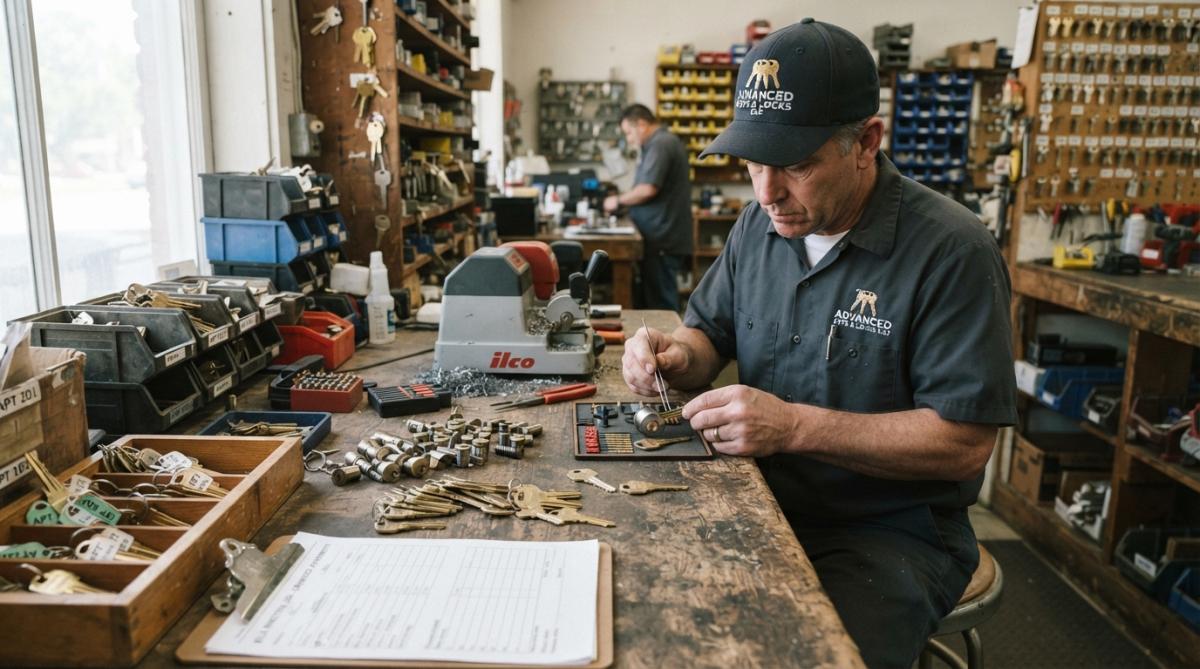
Labor consolidation. Rekeying is a pinning task: once the technician is on site with the pinning kit and plug tools, the second cylinder takes a fraction of the time the first one did. That saved time, not hardware, is what the discount is drawn from, which is why it is tied to one visit, not annual volume.
Keying plan efficiency. If you want every unit keyed alike, or a master key system where one master opens all units and each tenant key opens only their own, the technician can pin cylinders in batches. Master keying adds front-end labor but reduces per-unit cost on large portfolios because the pinning logic is set once and repeated.
What a Written Quote Should Contain
- Per-lock rate at each volume tier, in writing
- Whether the service call or trip fee is waived at the multi-unit threshold
- After-hours and holiday rate, stated separately
- Whether key duplication is included or billed per key
- Keying plan: keyed alike, master keyed, or individual
- Documentation provided after each job (cylinders rekeyed, keyway, keys issued)
- How new units are added to the agreement mid-term
Red Flags Worth Walking Away From
Smart Locks, Insurance, and Long-Term Value
Smart Lock Integration: The Real Cost of Skipping the Rekey
Insurance and Warranty: Where Lock Grade Actually Matters
Why this matters to a portfolio owner:
Maintenance and Longevity: The Cheapest Discount Is a Lock That Lasts
Conclusion
Frequently Asked Questions
Is it cheaper to replace locks or rekey them for rental properties?
Rekeying is almost always cheaper than replacement because the existing deadbolt or lockset stays on the door and only the internal pins change. Replacement means paying for new hardware plus installation labor on every unit. For a multi-unit rental, rekeying keeps your cost tied mostly to labor and new keys, while replacement adds hardware cost on top. The exception is when the existing locks are low-grade or damaged, in which case upgrading makes more sense than rekeying worn hardware.
How do locksmiths calculate bulk discounts for property management?
Most locksmiths base a bulk discount on the total number of cylinders or units serviced in one visit, not on a flat percentage. A single trip covering ten units costs the company less in travel and setup than ten separate calls, so that savings gets passed back as a lower per-unit rate. Factors that affect the discount include unit count, whether all locks are the same brand, access to each door, and whether you sign a recurring service agreement.
What is the standard turnaround time for rekeying multiple rental units?
Turnaround depends on unit count and access. A small batch of three to five units is often completed in a single visit of a few hours. Larger portfolios may be scheduled across multiple days so each unit is finished and keys are handed off cleanly. Booking during a turnover window, before new tenants move in, keeps the schedule predictable. A locksmith service agreement for property managers typically locks in priority scheduling for these recurring jobs.
How often should rental property locks be rekeyed?
Rekey between every tenancy change, at minimum, so a departing tenant's key no longer opens the door. Many property managers also rekey after a lost key, a break-in, or any turnover where key control was unclear. For buildings with a master key system, rekeying a single unit should not disturb the rest of the system if the locksmith plans the pinning correctly. Annual reviews of your key control policy help catch units that slipped through.