 ultimate-guide
Why You Need a Professional for High Security Locks
Last Updated: October 22, 2026
Quick Summary
You need a professional for high security locks because installation quality, not the lock itself, is usually the weak point. High security locks demand precise boring, correct grade matching across the whole assembly, and registered key control, and mistakes void warranties and leave doors vulnerable. A certified locksmith assesses the door as a system and documents the work for warranty and insurance.
- High security deadbolts typically need a 2-1/8-inch bore and a 1-inch edge bore held to tight tolerance.
- A Grade 1 deadbolt on an unreinforced softwood frame performs like a Grade 3 lock under force.
- Professional installation includes a security audit, precision installation, key control setup, and documented handover.
- Ask for a locksmith's certification number and confirm it with the issuing organization.
- Manufacturers commonly condition warranty coverage on installation by a qualified professional.
Table of Contents
- What Makes High Security Locks Different
- The Real Risks of DIY High-Security Lock Installation
- What Professional High-Security Lock Installation Involves
- How to Choose a Locksmith You Can Trust
- High-Security Locks for Businesses: Key Control and Access Management
- Insurance, Liability, and Warranty: The Hidden Value of Certification
- Conclusion
- Frequently Asked Questions
What Makes High Security Locks Different
High security locks are locking systems engineered to resist the techniques that defeat ordinary hardware: lock picking, bump keys, drilling, and unauthorized duplication. The difference is not cosmetic.
Standard residential locks are built to a price point. A conventional pin-tumbler cylinder will open for anyone with basic locksmith tools and five minutes of practice.
That engineering creates a specific problem for do-it-yourselfers. High security hardware is far less forgiving of installation error than a builder-grade deadbolt.
At Advanced Keys & Locks LLC, we install and service this hardware daily, and the pattern is consistent. The lock is rarely the weak point. The installation is.
The Real Risks of DIY High-Security Lock Installation
The biggest mistake with high security locks is assuming they install like the lock they replaced. They usually don't. A builder-grade deadbolt tolerates a hole drilled a quarter-inch off; a high security cylinder with a hardened steel insert and a restricted keyway does not. The failure modes are specific, and they are worth understanding before you pick up a drill.
Here is where DIY installation goes wrong, and what actually happens inside the door:
- Improper door preparation and bolt misalignment. High security deadbolts often require precise boring and mortising, typically a 2-1/8-inch bore for the cylinder and a 1-inch edge bore for the bolt, held to tight tolerance. A hole drilled slightly off-center misaligns the bolt and the strike, so the door never fully seats. The bolt may extend only partway into the strike plate, which cuts the effective throw and gives a pry bar or a kick a purchase point the hardware was designed to deny.
- Grade mismatch across the assembly. A high security cylinder paired with a thin or soft strike plate gives an attacker a shortcut around the cylinder entirely. The ANSI/BHMA grading standards for locks and deadbolts exist precisely because the whole assembly, cylinder, bolt, strike, and reinforcement, has to meet a grade. A Grade 1 deadbolt bolted to an unreinforced softwood frame performs like a Grade 3 lock under force. DIY installers routinely upgrade the cylinder and leave the strike and frame untouched.
- Frame and hinge vulnerabilities left unaddressed. Most forced-entry attempts do not defeat the cylinder; they defeat the door. A hollow or thin-gauge strike plate, short hinge screws that bite only the jamb trim, and a frame that flexes under load are the real weak points. A professional assessment catches these because the installer is looking at the door as a system, not just swapping a cylinder.
- Lost key control and registration. Restricted keyways require authorization to duplicate. Install the lock yourself and you may not be registered as the key holder of record, which complicates every future replacement, rekey, and tenant turnover. On a commercial master key system, an unregistered cylinder can break the hierarchy the rest of the building depends on.
- Voided manufacturer warranties. Many manufacturers tie coverage to professional installation, and the mechanism is usually buried in the warranty terms: coverage is conditioned on installation by a qualified or licensed professional, and a self-installed lock that fails may leave you paying for the replacement out of pocket. This is the quiet cost of DIY, the hardware you paid a premium for loses the protection that justified the premium.
- No documentation trail. A professional installation produces a record: the hardware grade, the date of service, the key control setup, and the installer's credentials. A DIY install produces none of that, which matters when an insurer, a warranty administrator, or a commercial landlord asks how the work was done.
The financial exposure is real, but the security exposure is worse.
What Professional High-Security Lock Installation Involves
Professional high-security lock installation is a security assessment first and a hardware job second. A certified locksmith evaluates the door, frame, and surrounding structure before touching a drill.
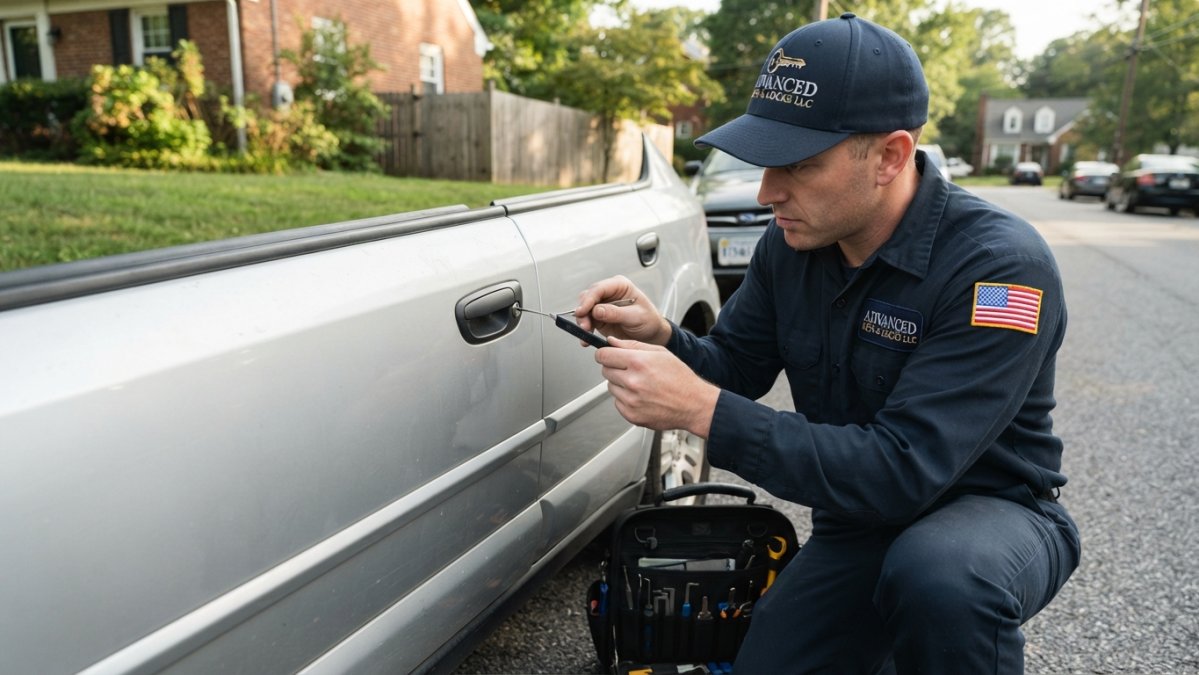
The process typically includes:
- Security audit. Checking door material, frame integrity, hinge security, and strike plate reinforcement.
- Hardware compatibility check. Confirming the cylinder, deadbolt, and door reinforcement work as a system at the correct grade.
- Precision installation. Boring and mortising to specification so the bolt engages fully and the door seals correctly.
- Key control setup. Registering the restricted keyway so only authorized parties can duplicate keys.
- Testing and handover. Verifying pick resistance, smooth operation, and documenting the installation for warranty and insurance purposes.
That last step matters more than most homeowners realize. Documentation is what proves the work was done to standard if a claim ever arises.
How to Choose a Locksmith You Can Trust
Choosing a locksmith comes down to verification, not price. Ask three questions before anyone touches your door: Are you licensed and insured? Can you show certification? Will you quote upfront in writing?
The Better Business Bureau's guidance on hiring a locksmith recommends confirming a physical business address and getting the quote in writing before work begins. That protects you from the bait-and-switch pricing that plagues this industry.
What most guides miss is that the certification question is not a formality, it is the hinge on which your insurance, warranty, and liability protection turns.
For high security work specifically, the vetting goes deeper than general licensing:
- Restricted keyway experience. Ask whether the locksmith has worked with the specific restricted keyway brand you are installing. Not every general locksmith does, and key control registration depends on the installer being an authorized dealer or registered installer for that system.
- Master key system design. For commercial work, ask for examples of master key hierarchies the locksmith has built and documented. Designing a hierarchy is a different skill from installing a cylinder, and a poorly designed system either locks out the people who need access or hands out keys that open everything.
- Insurance and liability documentation. Ask what the locksmith provides after the job: a written installation record, the hardware grade, the key control documentation, and proof of the installer's insurance. That paperwork is what an insurer or a warranty administrator will ask for if a claim arises.
- Written, itemized quotes. The quote should break out hardware, labor, and any door or frame reinforcement separately, so you can see whether the assembly is being upgraded as a system or just the cylinder swapped.
The certification question is where the insurance and liability angle from the next section begins. A verifiable, documented professional is not just more likely to install the hardware correctly; that professional is the reason your insurer and your manufacturer will stand behind the work later.
High-Security Locks for Businesses: Key Control and Access Management
High-security locks for businesses solve a problem residential hardware never faces: managing dozens or hundreds of keys across departments, tenants, and staff turnover.
A master key system is a locking arrangement where one key opens multiple locks while individual keys open only their assigned doors. It is the backbone of commercial access control.
Key control is the other half. Restricted keyways mean keys cannot be duplicated without authorization, which matters enormously when an employee leaves or a tenant moves out.
Property managers and facility managers should treat this as a vulnerability assessment, not a hardware purchase.
Insurance, Liability, and Warranty: The Hidden Value of Certification
Here is the angle most guides skip entirely: professional installation affects your insurance and your liability.
Insurers increasingly ask how security hardware was installed when evaluating claims. A professionally installed, documented system is easier to defend than a self-installed lock with no paper trail.
Warranty coverage follows the same logic. Manufacturers of high security hardware commonly condition coverage on installation by a qualified professional. Self-install and you may have voided the very protection you paid for.
Liability matters for businesses in particular. If a tenant or employee is harmed because a lock failed, the question of who installed it and whether it met security standards becomes central.
Conclusion
The gap between a high security lock and a secure door is installation quality, and that gap is where DIY projects quietly fail. Certification, documentation, and key control are not upsells. They are the difference between hardware that works and hardware that only looks like it does.
Advanced Keys & Locks LLC provides fully certified and insured locksmiths, upfront pricing with no hidden fees, and 24/7 availability for residential, commercial, and automotive needs. From high security lock installation to master key systems and access control, our team handles the assessment, the installation, and the documentation that protects you later.
Get a quote from Advanced Keys & Locks LLC and secure your property with hardware installed to standard the first time.
Frequently Asked Questions
Can I install a high-security lock myself?
You can physically install some high-security locks, but doing so voids most manufacturer warranties and often violates insurance requirements. High-security locks require precise door preparation, correct strike plate alignment, and proper cylinder seating. A mistake of even a few millimeters can compromise the lock's drill resistance and pick resistance. Professional installation ensures the lock performs as certified and keeps your warranty valid.
How do I choose a locksmith for a high-security lock?
Verify state licensing and insurance before booking. Ask for the locksmith's certification and confirm they have experience with the specific lock brand you want. Request a written quote upfront and check reviews for complaints about bait-and-switch pricing. A reputable locksmith will answer technical questions about keyways, cylinder mechanisms, and master key systems without hesitation.
Are high-security locks worth the extra cost?
High-security locks cost more than standard deadbolts, but they resist the most common forced entry methods: bump keys, lock picking, and drilling. Many also include key control features that prevent unauthorized duplication. For homes and businesses storing valuable assets, the added protection and potential insurance discounts often justify the investment.
What is considered a high-security lock?
A high-security lock typically features a patented keyway, hardened steel inserts for drill resistance, and restricted key duplication. These locks meet strict security standards and often carry ANSI/BHMA Grade 1 ratings. They are designed to resist lock picking, bumping, and forced entry far better than standard hardware.
Do high-security locks work with smart home systems?
Some high-security lock models integrate with smart home platforms, but compatibility varies by brand. A certified locksmith can assess your door's hardware compatibility and recommend a high-security lock that supports smart lock integration without compromising physical security. Professional installation ensures the electronic and mechanical components work together correctly.