 ultimate-guide
Emergency Locksmith Response Time Expectations: What to Know
Table of Contents
- What Emergency Locksmith Response Time Expectations Really Look Like
- Average Locksmith Response Time at 2 AM: What to Expect
- Factors Affecting Locksmith Arrival Time
- What to Do While Waiting for a Locksmith
- How to Verify a Locksmith's Credentials and Reliability
- Cost-Time Correlation: Why Faster Response Sometimes Costs More
- Conclusion
- Frequently Asked Questions
Last Updated: September 18, 2026
What Emergency Locksmith Response Time Expectations Really Look Like
Emergency locksmith response time expectations describe the arrival window a customer should reasonably anticipate after placing an urgent lockout call. This guide from Advanced Keys & Locks LLC breaks down what actually shapes that window, so you can judge whether a dispatcher's promise is realistic or rehearsed. Knowing the difference matters, because a vague "we'll be there soon" is not the same as a confirmed ETA.
Typical Arrival Windows by Service Type
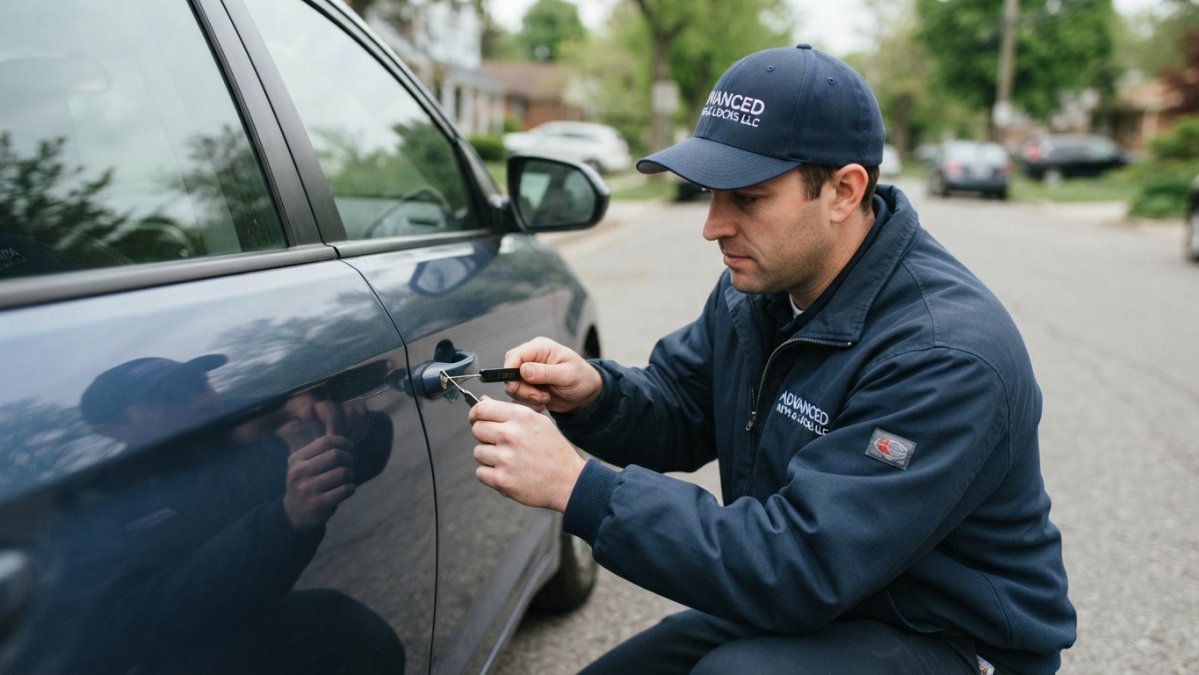
Response times shift depending on the type of emergency. A residential lockout in a dense neighborhood usually resolves faster than an automotive lockout on a highway shoulder, because the technician's service radius and the complexity of the job both change.
| Service Type | Typical Arrival Window | Key Variable |
|---|---|---|
| Residential lockout | 15-30 minutes | Technician location |
| Commercial lockout | 20-40 minutes | Building access rules |
| Automotive lockout | 20-45 minutes | Roadside positioning |
| Key fob programming | 30-60 minutes | Mobile unit equipment |
| Lock rekeying | 30-60 minutes | Parts on hand |
Average Locksmith Response Time at 2 AM: What to Expect
The average locksmith response time at 2 AM is usually longer than a daytime call because fewer technicians are on shift and dispatch has to route a mobile unit from a wider service radius. Off-hours calls also carry more uncertainty: the technician may be finishing another job, and traffic data is less predictable at that hour.
What Actually Changes Between 10 PM and 6 AM
The overnight window is not just "daytime with fewer people." Three mechanics shift:
- Standby staffing versus on-call rotation. A company with a technician physically on standby can roll a unit in minutes. A company using an on-call rotation has to wake someone, who then has to drive from home.
- Service radius expansion. With fewer units on the road, each one covers more ground.
- Dispatch software versus manual routing. Live GPS dispatch assigns the nearest available unit automatically. Manual dispatch relies on whoever answers the phone knowing where the trucks are, and at 2 AM, that person may be the same person driving.
Questions That Separate a Real 24/7 Operation From a Call-Forwarding Service
Many "24/7" listings are answering services that forward your call to a contractor who may or may not pick up. Before you commit, ask:
- Is the person answering this call employed by the locksmith company, or an answering service?
- How many technicians are on shift right now, and where is the nearest one?
- Can you give me a specific ETA, not a range?
- Will the technician call me before arriving?
- What is the total price, including any after-hours surcharge?
Why Overnight Calls Cost More, and When That's Legitimate
After-hours surcharges are standard in the trades, and locksmithing is no exception. A company paying a technician to sit on standby overnight, insuring a fleet, and running dispatch software has real fixed costs that daytime-only competitors don't carry. What is not legitimate is a quote that changes once the technician is at your door. Ask for the total, service call, labor, parts, and any after-hours fee, before you agree to dispatch.
Factors Affecting Locksmith Arrival Time
Three variables drive nearly every delay: dispatch efficiency, technician location, and the geographic constraints of your address. Dispatch efficiency is the biggest lever. A company using GPS-based routing assigns the nearest available mobile unit, while a company taking calls manually may send whoever answers the phone first.
Urban vs. Rural and Traffic Impact
In an urban area, a technician might be two miles away but stuck in traffic congestion, pushing a 10-minute drive to 25 minutes. In a rural location, the technician may face no traffic at all but start 30 miles out. Traffic congestion and distance trade off against each other, which is why a simple mileage estimate rarely predicts arrival time accurately.
Time of Day, Dispatch Efficiency, and Service Radius
Peak hours (early morning and late afternoon) slow every mobile unit. Overnight, the constraint flips to service radius: fewer technicians cover a wider area. Ask any locksmith how far their service radius extends before you book, because a company that covers a 40-mile radius cannot promise the same ETA as one covering 10 miles.
What to Do While Waiting for a Locksmith
Most guides tell you to "stay safe and wait." That's not a plan. The wait window, often 15 to 45 minutes, is when the real risks occur: exposure to weather or traffic, an unfamiliar person arriving at your door, and the pressure to let someone work on your property before you've confirmed who they are. Here is a concrete protocol for that window.
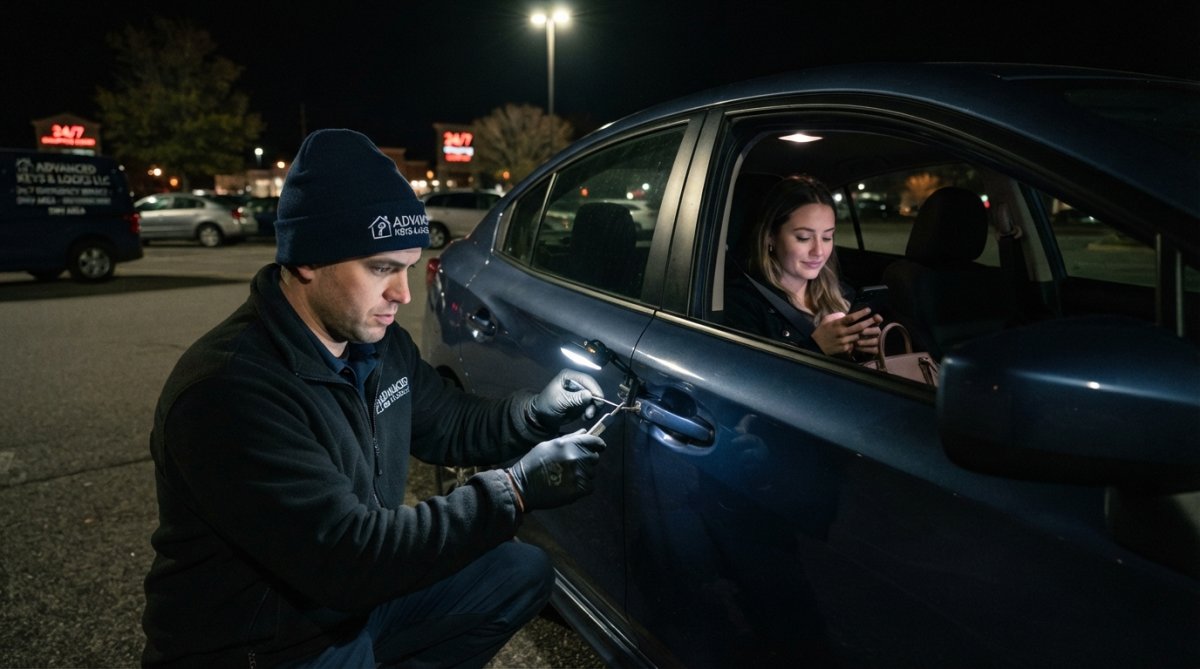
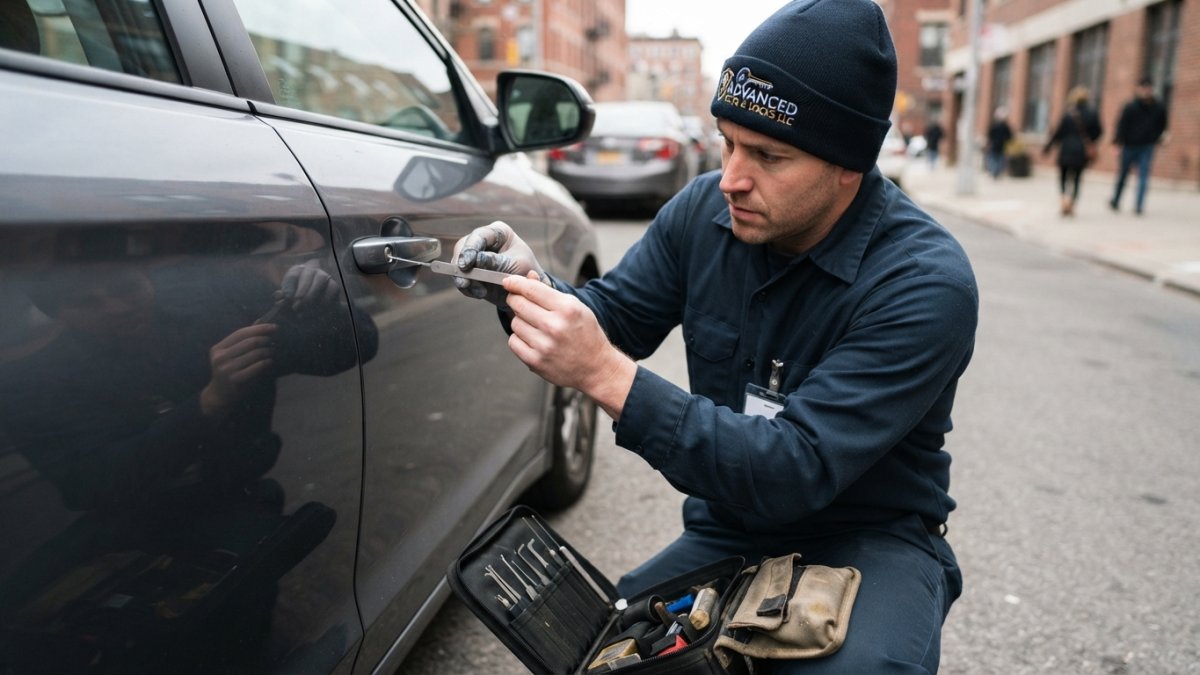
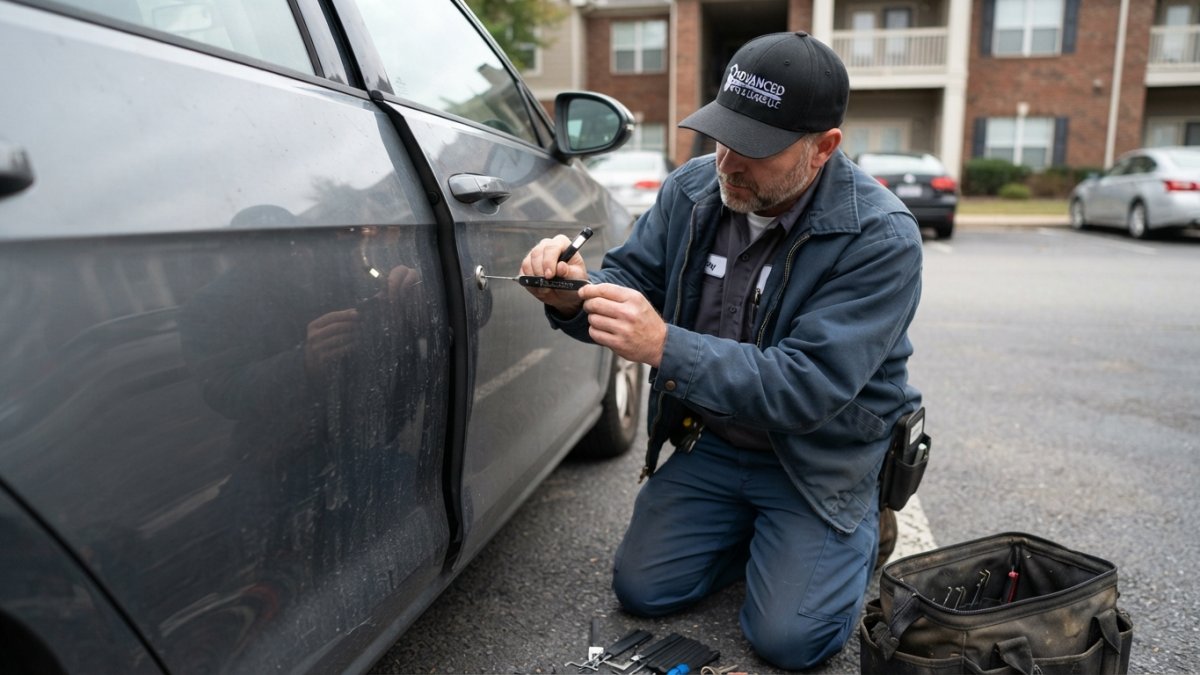
If You're Locked Out of a Vehicle
- Stay inside the vehicle if you can. Locked out of the cabin but able to reach a door? Get in and lock up. If you're outside the car, stand on the shoulder side away from traffic, behind a barrier if one exists, and never in a travel lane.
- Turn on hazard lights if you're stopped on or near a roadway. If you have a reflective vest or triangle, use it.
- Share your live location with a friend or family member via your phone's location-sharing feature, and tell them the company name and ETA you were given.
- Keep the engine off and windows cracked if you're waiting inside in extreme heat or cold, and watch for signs of distress.
If You're Locked Out of a Home or Business
- Wait in a well-lit, visible spot, near the front door under a porch light, or in a lobby if the building has one. Avoid waiting in a dark side yard or an unlit parking lot.
- Tell someone where you are. A quick text with your address, the company name, and the ETA is enough.
- Do not let anyone into the building who arrives before your technician and claims to be "with the company." Legitimate technicians arrive in marked vehicles and can be matched to the dispatch details you were given.
Verifying the Technician Before You Let Them Work
This is the step most guides skip, and it's the one that matters most. Before you allow anyone to touch your lock, run this check:
- Confirm the technician's name matches the name dispatch gave you
- Ask to see a company ID or business card with the company name
- Note the vehicle description and license plate
- Confirm the quoted price in person before any work begins
- Ask for the license number if your state licenses locksmiths, and confirm it matches the company you called
- Get a written or emailed invoice before paying, and pay by card rather than cash when possible
Red Flags During the Wait
- A technician arrives in an unmarked vehicle with no company identification
- The quoted price increases after the technician inspects the lock
- The technician insists on cash only
- The technician pressures you to approve additional work you didn't request
- The company name on the invoice doesn't match the company you called
If any of these occur, you can decline the work, ask the technician to leave, and report the incident to your state's consumer protection office and the Better Business Bureau. You are not obligated to proceed with a service you didn't agree to at the price you were quoted.
How to Verify a Locksmith's Credentials and Reliability
Verification starts before the technician arrives. A legitimate locksmith can state their license number, insurance coverage, and business address on request. Ask for all three. If a dispatcher hesitates or deflects, that's your answer.
Real-Time Tracking and Callback Speed
Real-time tracking technology has changed how reliable companies operate. A dispatcher using GPS can tell you exactly where the technician is and update the ETA as conditions change. Callback speed is the tell: a company that calls you back within minutes of a status change is running live dispatch, while one that goes silent is likely juggling too many jobs.
Cost-Time Correlation: Why Faster Response Sometimes Costs More
Faster response often costs more, and that's not a scam. A company that keeps a technician on standby overnight, maintains a fleet of mobile units, and uses live dispatch software carries higher operating costs than one that routes calls whenever a technician is free. You're paying for availability, not just labor.
Conclusion
The gap between a promised ETA and a real one comes down to dispatch quality, not luck. When you need verified credentials, live tracking, and a confirmed arrival window, Advanced Keys & Locks LLC delivers 24/7 availability, upfront pricing with no hidden fees, and fully certified and insured locksmiths across residential, commercial, and automotive calls. Get a quote from Advanced Keys & Locks LLC and know exactly when help will arrive.
Frequently Asked Questions
How long do emergency locksmiths take to arrive?
Factors like traffic congestion, time of day, and technician location affect the arrival window. When you call, ask for a specific estimated time of arrival (ETA) and confirm whether the dispatcher is tracking a mobile unit nearby. A reliable 24/7 locksmith service should give you a realistic window, not just say 'we'll be there soon.'
What factors affect locksmith arrival time at night?
Nighttime calls involve fewer technicians on duty, reduced dispatch efficiency, and limited service availability in some areas. Traffic congestion is usually lighter after peak hours, which helps, but geographic constraints and service radius still apply. Off-hours calls may also require the locksmith to travel from a farther mobile unit. Weather and road conditions can add delays. Ask the dispatcher which factors are affecting your specific ETA so you can plan accordingly.
What should I do while waiting for a locksmith?
Stay in a safe, well-lit location, ideally inside your locked car or a nearby public space. Avoid attempting to break in yourself, which can damage the lock or door and lead to higher repair costs. Keep your phone charged and stay reachable in case the technician calls. If you're locked out of a rental, contact your landlord or property manager to confirm permission for rekeying or lock replacement. Have your ID ready to verify you're the rightful occupant.
How can I verify a locksmith is certified and insured before they arrive?
Ask for the locksmith's license number and proof of insurance before they start work. In many states, locksmiths must carry a state-issued license, and legitimate companies will provide it on request. Check for a physical business address, a professional website, and reviews that mention actual service experiences. Avoid paying in full upfront or accepting quotes that change dramatically on-site. A trustworthy locksmith will confirm pricing before starting and provide a receipt after the job.