 ultimate-guide
Hiring a Professional Locksmith for Business: 2026 Guide
Table of Contents
- Why Hiring a Professional Locksmith for Business Is Different
- Vetting Criteria: How to Verify a Licensed and Insured Locksmith
- Commercial Locksmith Service Cost: Pricing Models and Transparency
- Best Commercial Door Lock Types for Your Business
- Access Control System for Small Business: Options and Installation
- Master Key Systems, High-Security Locks, and Emergency Services
- Compliance, ADA Requirements, and Maintenance Schedules
- Conclusion: Securing Your Business with the Right Locksmith Partner
- Frequently Asked Questions
Last Updated: October 2, 2026
Why Hiring a Professional Locksmith for Business Is Different
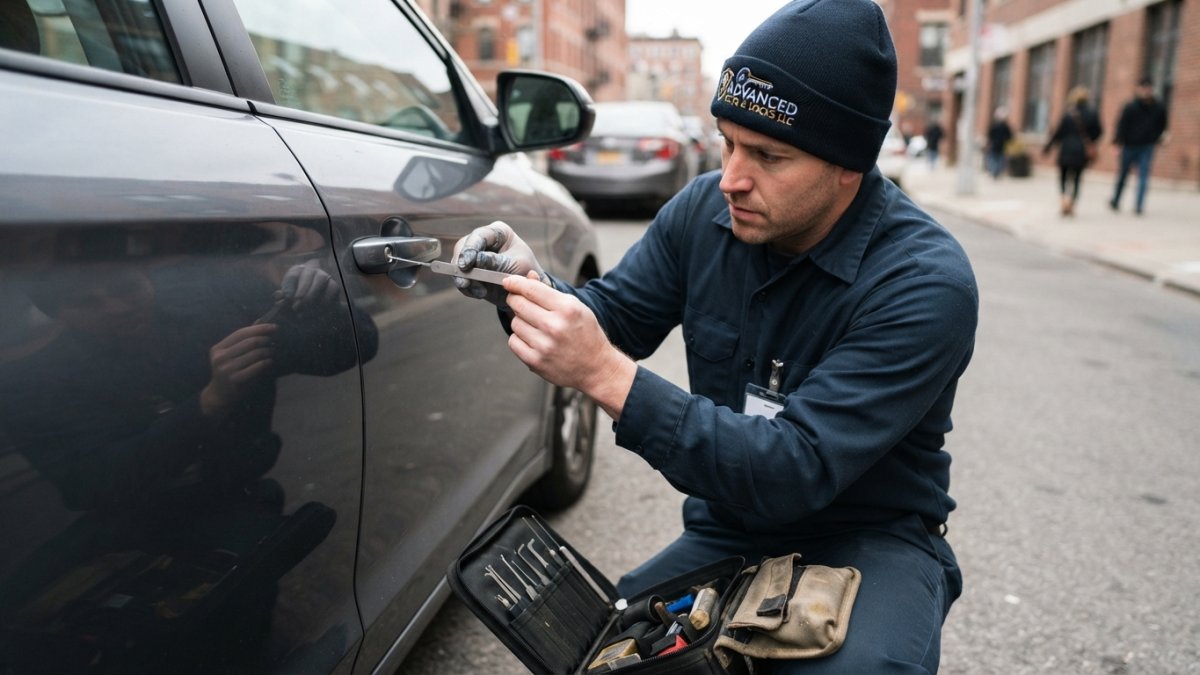
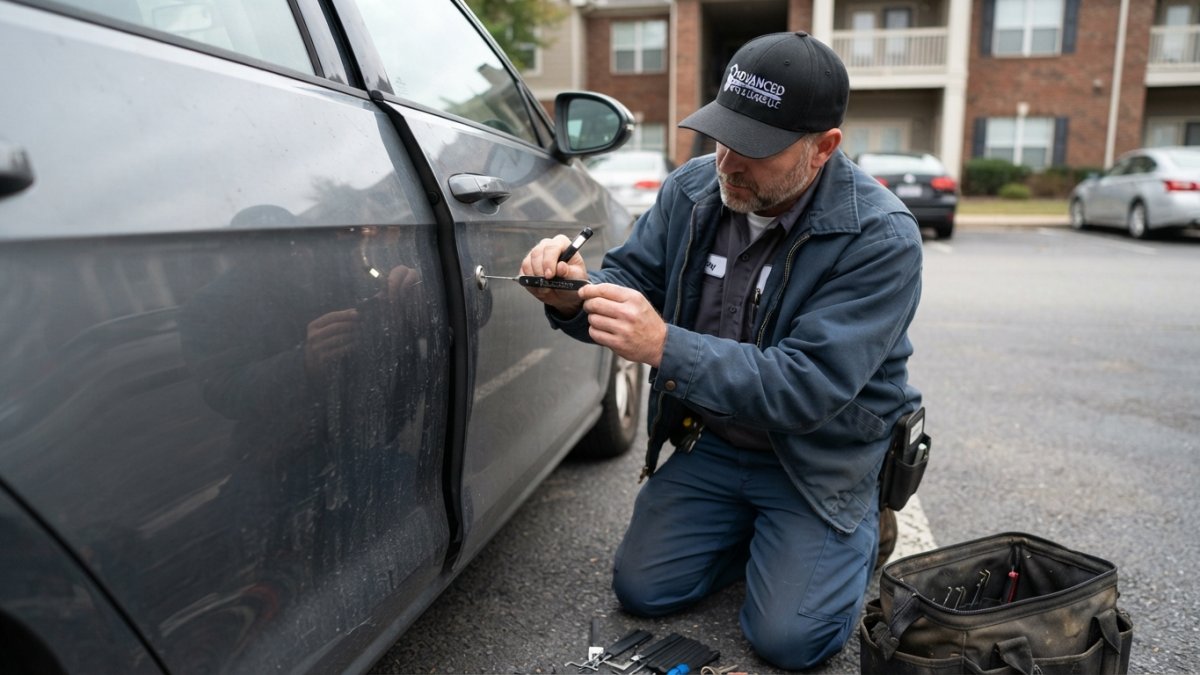
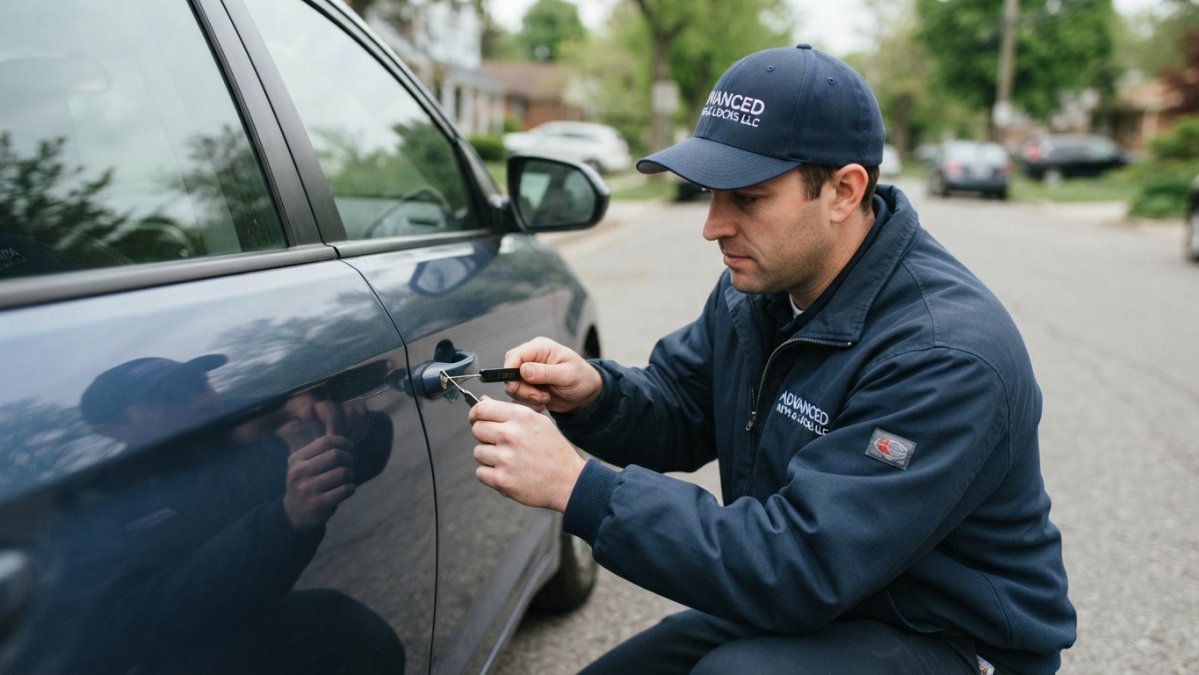
Hiring a professional locksmith for business is not the same as calling someone to open a jammed apartment door. Commercial work involves master key systems, access control, fire code compliance, and hardware built to survive daily traffic. This guide from Advanced Keys & Locks LLC covers vetting a provider, what commercial locksmith service cost reflects, and which hardware fits your building.
A common mistake is treating a commercial job like a residential one: the cheapest quote on the phone usually wins, and the business owner pays for it later. Commercial locksmiths carry different insurance, different stock, and different certifications than the technician who unlocks cars in a parking lot. The Associated Locksmiths of America membership standards exist precisely because the gap between a qualified commercial technician and a general handyman is wide.
Vetting Criteria: How to Verify a Licensed and Insured Locksmith
Ask for the license number, insurance certificate, and a physical business address before anyone touches a lock. A legitimate commercial locksmith provides all three without hesitation.
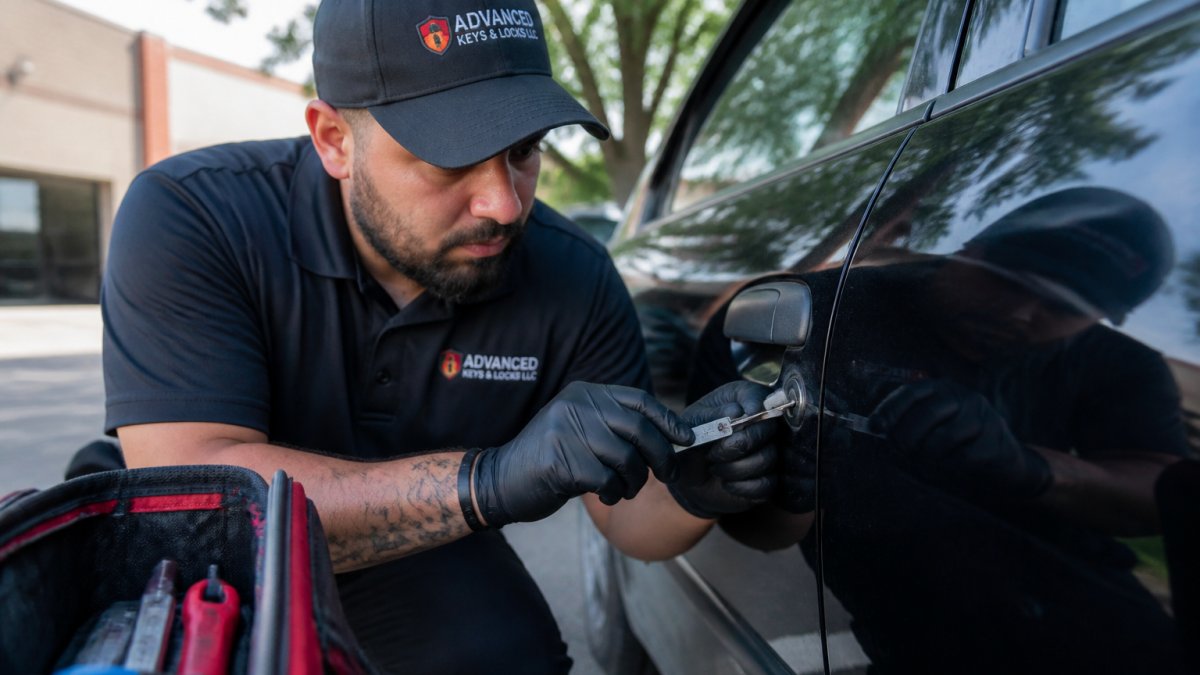
State licensing rules for locksmiths vary considerably, and several states require a specific license or registration before a technician can legally perform paid lock work. The consumer protection guidance on locksmith fraud is worth reading before you hire, because the pattern of unlicensed operators quoting one price and charging another is well documented. Advanced Keys & Locks LLC operates as a licensed and insured LLC with certified locksmiths, which is the baseline any business should demand.
Here is the verification checklist we recommend to facility managers:
- Confirm the license or registration number against your state's licensing database
- Request a certificate of insurance showing general liability coverage
- Verify a physical street address, not just a phone number
- Ask whether technicians are employees or subcontractors
- Request the name of the technician who will arrive on site
- Get the quote in writing before work begins
Commercial Locksmith Service Cost: Pricing Models and Transparency
Commercial locksmith service cost depends on hardware, openings, time of day, and whether work is scheduled or emergency. Any provider quoting a flat rate without asking about your building is guessing. A trustworthy quote breaks the number into labor and hardware, in writing, before a technician rolls.
The Three Pricing Models
- Flat rate per service - a set fee for a defined task like rekeying one lock. Best when scope is unambiguous and the door count is small.
- Per-opening pricing - common for multi-door jobs, where the total scales with locks serviced. Facility managers prefer it because the unit cost is visible.
- Time-and-materials - used for diagnostics, complex access control integration, or repairs where scope is unclear. Legitimate for unknowns, but pair it with a not-to-exceed cap.
Emergency and after-hours calls carry a standard premium, which honest providers state upfront, in writing, before dispatch.
What Actually Drives the Price
Two quotes for the "same" job can differ by hundreds of dollars. The variables that move pricing most:
- Labor vs. hardware split. Labor is the technician's time and skill; hardware is the lock, cylinder, closer, or reader. A quote that lumps them together hides where the money goes. Ask for them separated.
- Hardware grade and brand. Commercial hardware is graded (Grade 1, 2, or 3 under BHMA/ANSI); Grade 1 costs more but survives heavy traffic far longer. A cheap Grade 3 lock on a main entrance is a false economy.
- Number of openings. Per-door pricing drops as the count rises because setup and travel are amortized.
- Time of day. Nights, weekends, and holidays carry premiums. Scheduled business-hours work is cheaper.
- Access control integration. Electronic strikes, readers, or a networked controller add wiring, power, and configuration labor a simple rekey does not.
- Existing condition. A misaligned door, failing closer, or one drilled by a previous technician costs more to correct than a clean install.
How to Compare Quotes Without Getting Burned
Ask every provider for a written scope of work listing each opening, the hardware (with brand and grade), and the labor charge separately. Three questions expose the difference:
- "Is this a flat rate or time-and-materials, and if time-and-materials, what is the not-to-exceed cap?"
- "What grade and brand of hardware is included, and is there a warranty on parts and labor?"
- "What is the after-hours premium, and does it apply to the dispatch or the hourly rate?"
Upfront pricing with no hidden fees is the single best signal of a trustworthy commercial operator.
Best Commercial Door Lock Types for Your Business
The best commercial door lock type depends on traffic volume, code requirements, and access control needs. The wrong choice creates a security gap or maintenance headache.
| Lock Type | Best For | Key Control | Maintenance Load |
|---|---|---|---|
| Cylindrical | Low-traffic interior doors | Standard | Low |
| Mortise | High-traffic main entrances | High | Moderate |
| Deadbolt | Exterior and storage doors | Standard | Low |
| Keypad electronic | Offices with staff turnover | High | Moderate |
| Biometric | Restricted or high-value rooms | Very high | Higher |
| Access control | Multi-door, multi-department sites | Very high | Higher |
Mechanical Locks: Deadbolts, Mortise, and Cylindrical
Mechanical locks remain the backbone of commercial security because they have no power dependency and no firmware. Cylindrical locks suit light-traffic interior doors, mortise locks handle heavy main entrances and integrate with panic bars where egress codes apply, and deadbolts add a layer electronic hardware cannot replace if power fails.
Electronic and Smart Locks: Keypad, Biometric, and Access Control
Electronic locks solve what mechanical hardware cannot: revoking access instantly when an employee leaves. Keypad and biometric locks remove key duplication risk entirely. For multi-tenant sites, electronic strikes and magnetic locks tied to an access control system give a per-door audit trail and time-based permissions. The trade-off is dependency on power and network, which is why most commercial sites run a hybrid.
Access Control System for Small Business: Options and Installation
An access control system for small business does not require an enterprise budget. A single-door keypad system with audit logging is a realistic starting point for most small offices and can expand as the business grows.
Installation typically follows this sequence:
- Security audit - map every entry point, traffic pattern, and egress requirement.
- Hardware selection - choose readers, electronic strikes or magnetic locks, and door closers matched to each opening.
- Wiring and power - run low-voltage power and network to each controlled door.
- Controller configuration - set user groups, schedules, and audit logging.
- Testing and handover - verify fail-safe behavior and egress function, and train staff.
A common mistake is installing access control on the front door only and leaving side and rear entrances on mechanical keys. Attackers use the door you forgot. A proper security audit catches these gaps before installation.
Master Key Systems, High-Security Locks, and Emergency Services
Master key systems and high-security locks are where commercial locksmith work gets technical, and where a generalist falls short.
Master Key System Design and Key Management
Master key system design builds a hierarchy where one key opens many doors and another opens only one, without compromising the others. A facility manager carries a single master, department heads get sub-masters, and staff get individual keys. Key management is the ongoing half: tracking who holds which key, rekeying when one is lost, and retiring credentials when someone leaves.
High-Security Locks and 24/7 Emergency Lockout Response
High-security locks use restricted keyways and patented key control, so keys cannot be duplicated at a hardware store without authorization. For businesses holding inventory, records, or cash, that restriction is the point. Alongside hardware, 24/7 availability matters for office lockout assistance, failed hardware, and after-hours incidents. Ask what the guaranteed arrival window is for your area before you rely on it.
Compliance, ADA Requirements, and Maintenance Schedules
Compliance is the part of commercial locksmith work that carries legal exposure, and it is the part most businesses overlook until an inspector flags it. The ADA Standards for Accessible Design set requirements for door hardware, opening force, and operable parts that apply to commercial premises. Panic bars and exit devices must meet life-safety egress requirements, and door closers must be adjusted so doors latch reliably without exceeding the force limits the standards allow.
The Two Standards That Govern Commercial Door Hardware
Most commercial door hardware compliance comes down to two bodies of rules, and a qualified locksmith should speak to both:
- ADA accessibility. The ADA Standards for Accessible Design require operable parts (handles, levers, thumbturns) be usable with one hand and without tight grasping, pinching, or twisting of the wrist. They cap the force required to open an interior hinged door and require hardware reachable from a seated position. A round doorknob is the classic violation; a lever handle is the fix.
- Life-safety egress. Exit doors serving a certain occupant load must have panic or fire exit hardware that releases with a single motion and needs no key, tool, or special knowledge from the inside. A locked-from-the-outside main entrance still needs a free-egress interior release.
A locksmith who installs a deadbolt on an egress door without checking the occupant load and exit-device requirement has created a code violation, not a security upgrade.
Why This Matters to a Business Owner
Compliance failures are liability problems, not just inspection problems. If an employee or customer cannot exit during an emergency because hardware was installed incorrectly, the business carries the exposure. Any hardware change on an exit or public door should be checked against both standards before installation.
A Practical Maintenance Schedule
Hardware maintenance is the cheapest insurance against a compliance failure. A practical schedule looks like this:
| Frequency | Task |
|---|---|
| Monthly | Test exit devices and panic bars for full travel |
| Quarterly | Lubricate and adjust door closers |
| Semi-annually | Inspect and rekey cylinders as staff changes |
| Annually | Full security audit and access control review |
What to Watch Between Scheduled Visits
A few failure signs show up before an inspector does. A door that no longer latches on its own usually means the closer needs adjustment. A spongy panic bar that requires two pushes is a failing exit device. A wobbling lever handle is a loose through-bolt. Catching these early keeps the door compliant and avoids an emergency call.
Conclusion: Securing Your Business with the Right Locksmith Partner
The gap between a qualified commercial locksmith and a cheap phone quote shows up months later, in failed hardware, compliance citations, or a security breach nobody saw coming. Vetting, transparent pricing, and a real maintenance schedule separate a vendor from a partner. Advanced Keys & Locks LLC provides 24/7 availability for emergency lockouts, upfront pricing with no hidden fees, and fully certified and insured locksmiths who handle master key systems and access control installations for commercial clients.
Frequently Asked Questions
How much will a locksmith charge to change a door lock?
Pricing for changing a commercial door lock depends on the lock type, quantity, and any additional hardware needed. Basic rekeying or lock replacement costs less than installing high-security or electronic locks. Most reputable locksmiths provide upfront quotes after assessing your doors and security requirements. Request a written estimate that includes parts, labor, and any service call fees before work begins.
What should I look for when hiring a professional locksmith for business?
Verify the locksmith holds a current state license, carries liability insurance, and is bonded. Ask for proof of certification from a recognized trade association. Check online reviews and request references from other commercial clients. A trustworthy professional locksmith will provide a written estimate, arrive in a marked vehicle, and never pressure you into unnecessary services. Confirm they have experience with commercial hardware, master key systems, and access control.
Are commercial locksmiths required to be licensed and insured?
Licensing requirements vary by state, but most states regulate locksmiths and require a license for commercial work. Insurance and bonding protect you if property is damaged during service. Always ask to see a copy of the license and certificate of insurance before hiring. A legitimate commercial locksmith will gladly provide these documents. If a provider hesitates or makes excuses, consider another vendor.
How often should a business update its master key system?
Update your master key system whenever there is employee turnover, a lost key, or a security breach. Even without those events, a professional security audit every 12 to 18 months helps identify outdated hardware and potential vulnerabilities. Regular lock rekeying and key duplication controls keep your key management secure. A locksmith can recommend a maintenance schedule based on your building's traffic and risk level.
What is the difference between residential and commercial locksmith services?
Commercial locksmiths handle higher-security hardware, master key systems, access control, panic bars, and door closers that meet building codes and ADA requirements. Residential locksmiths focus on standard deadbolts, knob locks, and home safes. Commercial work often involves multiple doors, employee access levels, and integration with alarm systems. Hiring a locksmith with commercial experience ensures your business meets safety and compliance standards.
How much does it cost to rekey a business door?
Rekeying a business door typically costs less than replacing the entire lock because you keep the existing hardware. The final price depends on the number of locks, cylinder type, and whether you need new keys. Some locksmiths offer bulk pricing for multiple doors. Request an itemized quote that separates labor from parts. Upfront pricing with no hidden fees is a hallmark of a trustworthy commercial locksmith.