 how-to
How to Verify Locksmith Credentials: 7 Steps for 2026
Table of Contents
- Why Verifying Locksmith Credentials Matters Before You Hire
- Step 1: Run a License Lookup in Your State's Public Database
- Step 2: Check Insurance, Bonding, and Certification Status
- Step 3: Verify Identity and Service Vehicle Identification on Arrival
- Questions to Ask a Locksmith Before Hiring
- How to Spot a Locksmith Scam: Red Flags and Fraud Prevention
- Locksmith License Requirements by State: What Varies and Why
- Frequently Asked Questions
Last Updated: September 20, 2026
Why Verifying Locksmith Credentials Matters Before You Hire
Learning how to verify locksmith credentials takes about ten minutes. Skipping that step can cost you hundreds of dollars and leave your home less safe than before the locksmith arrived.
Locksmithing is one of the few trades where a stranger gets direct access to your home, your car, or your business. Most states regulate the trade. Many do not. That gap is exactly where scam operations set up shop. They advertise a low price, arrive in an unmarked car, drill out your lock, and charge triple the quote. Some cases end with a homeowner's key copied for later use.
This guide walks through the steps that separate a licensed professional from a stranger with a drill.
Step 1: Run a License Lookup in Your State's Public Database
Start with your state's licensing board, not a search engine. Most states that regulate locksmiths maintain a public database where you can search by name or license number.
Some states place locksmiths under a broader security or alarm licensing board. Others leave the trade unregulated entirely. If your state has no board, ask the company for proof of a background check and liability insurance instead.
What to Enter and What the Results Should Show
Enter the company name first, then the individual technician's name. A valid result should show:
- The license or registration number
- Current status (active, expired, or suspended)
- The legal business name and address
- Any disciplinary actions on record
A matching name with no license number is not a match.
Step 2: Check Insurance, Bonding, and Certification Status
A license alone does not cover damage. Ask for a certificate of liability insurance and a surety bond, and call the insurer to confirm the policy is active.
Step 3: Verify Identity and Service Vehicle Identification on Arrival
When the technician arrives, match the person to the paperwork before you let them touch the lock.
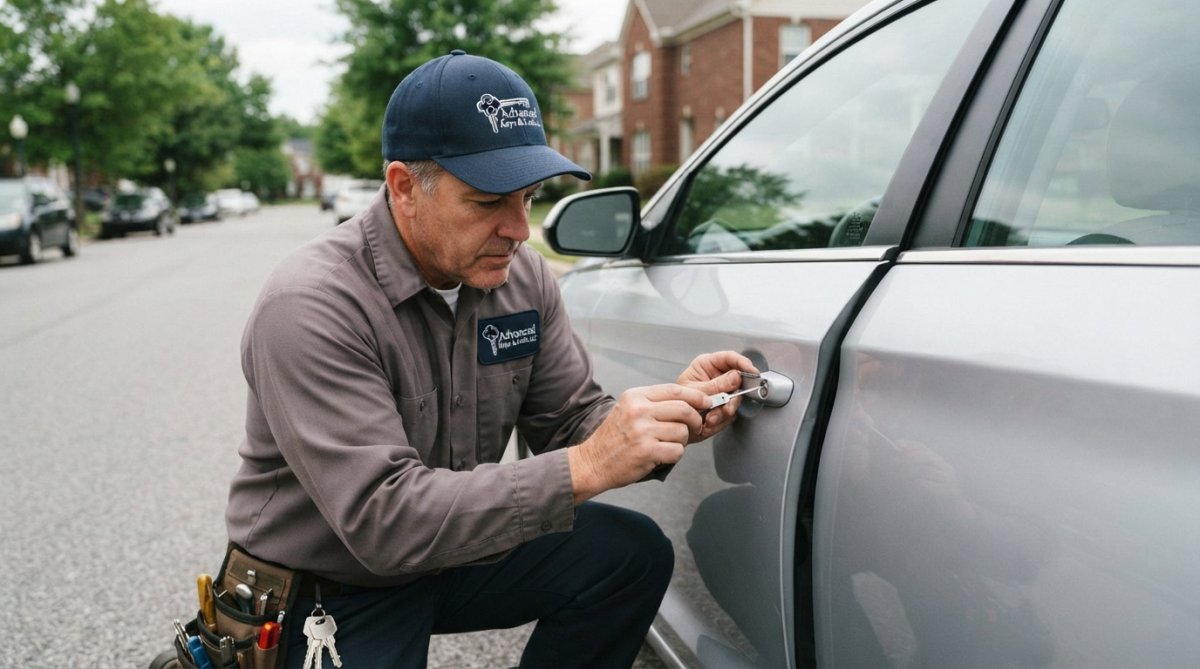
Run through this checklist at the door:
- Photo ID matches the name on the work order
- State license or registration card is current
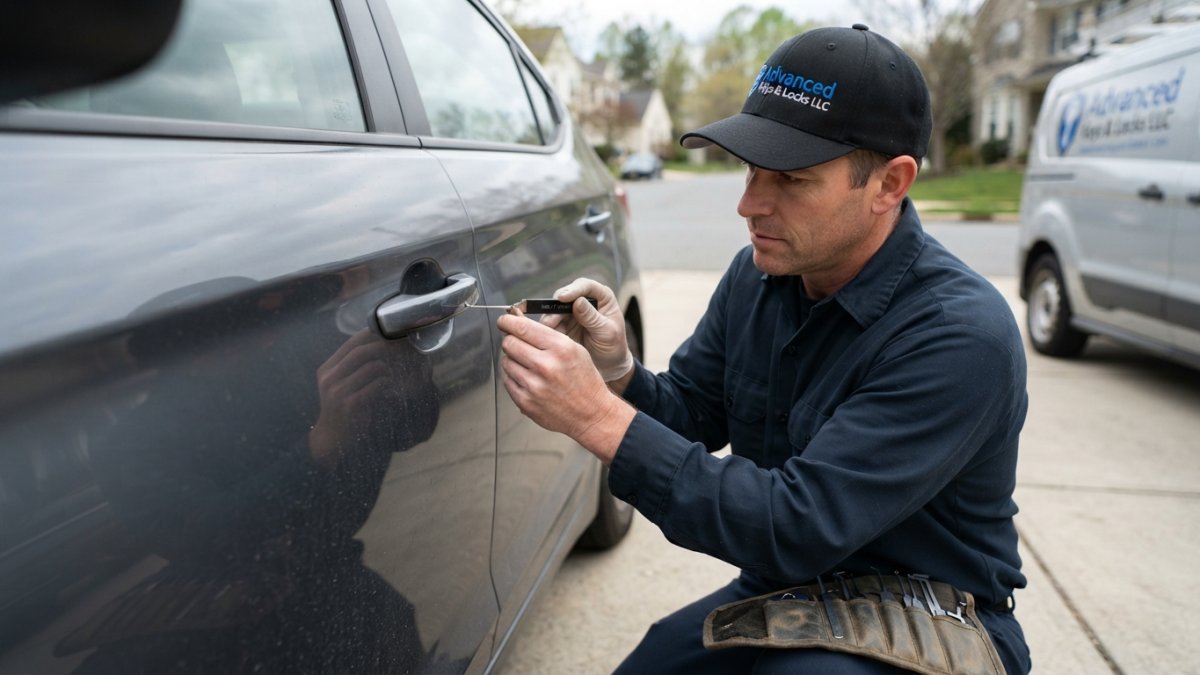
- Vehicle has company signage or a marked logo
- Technician can state the quoted price before starting work
- You receive a written estimate or work order to sign
Questions to Ask a Locksmith Before Hiring
Ask these questions on the phone, before anyone is dispatched. A legitimate company answers all of them without hesitation.
- What is your state license or registration number?
- Are you insured and bonded, and can you email proof?
- What is the total price, including the service call fee?
- Will you provide a written estimate before starting?
- How long until a technician arrives?
- Do you charge more for nights, weekends, or holidays?
- Will you rekey or replace the lock, and which do you recommend?
How to Spot a Locksmith Scam: Red Flags and Fraud Prevention
Scam operators follow a recognizable pattern, and the pattern is built around pricing, not locks. Once you understand the mechanics, the scam is easy to spot even in the middle of a lockout.
The Bait-and-Switch Pricing Playbook
The most common scam works like this:
- The lowball phone quote. The dispatcher quotes an unrealistically low price, often a flat "service call" fee with the labor described as "starting at" a number. The quote is designed to get you off the phone and stop you from calling anyone else.
- The arrival upsell. The technician arrives, looks at the lock, and announces it is a "high-security" or "commercial-grade" lock that requires drilling. The price jumps before any work begins.
- The drill-first approach. A skilled technician can pick most residential locks. Drilling destroys the lock and forces a replacement, which is where the real markup lives. Drilling should be a last resort, not a first move.
- The post-work invoice. After the lock is drilled and replaced, the technician hands you a bill several times the phone quote. Your door is open, your old lock is destroyed, and you are under pressure to pay.
- The cash demand. Payment is demanded in cash, sometimes with a technician offering to drive you to an ATM. No receipt, no paper trail, no recourse.
Red Flags to Watch For
- No license number on the website or truck. Real companies display both.
- A quote far below local averages. The low price is bait. The real charge appears after the lock is drilled.
- No written estimate. Verbal quotes are unenforceable and easy to inflate.
- Pressure to drill immediately. Drilling is a last resort, not a first move.
- Cash-only payment demands. Legitimate businesses accept cards and provide receipts.
- A generic call center. If the person answering cannot name the technician coming to your address, you are likely calling a lead broker.
- An out-of-area phone number or address. Scam networks often route calls across state lines.
- A technician who cannot produce a state license card on request. This is the single most reliable signal.
What to Do If You Are Being Overcharged Right Now
If a technician is standing in your doorway demanding more than the quoted price:
- Do not pay the inflated amount. You are not obligated to pay a price you never agreed to.
- Ask for the original quote in writing. If they cannot produce it, that is evidence in your favor.
- Take photos of the technician, the vehicle, the license plate, and the invoice.
- Pay by card if you must pay at all. A card charge can be disputed. Cash cannot.
- File complaints with your state's consumer protection office and licensing board, and report the incident to the Federal Trade Commission.
Locksmith License Requirements by State: What Varies and Why
Locksmith rules differ widely by state, and that variance is the single biggest reason verification matters. There is no national locksmith license. Each state decides whether to regulate the trade, and the states that do regulate it place locksmiths under wildly different agencies.
How to Find the Right Regulatory Body for Any State
Most guides stop at "check your state's licensing board." That advice fails the moment you do not know which board that is. Use this method instead:
- Search the state's official portal. Search for your state name plus "locksmith license" or "locksmith registration." Look for a
.govdomain. Ignore paid ads and lead-generation sites that rank above the official page. - Check the department of consumer affairs or professional licensing. In many states, locksmiths are licensed under a broad consumer affairs or professional regulation department rather than a dedicated locksmith board.
- Check the department of public safety or private security division. Some states classify locksmiths as a security trade and place them under the same agency that licenses alarm installers and private investigators.
- Check the department of motor vehicles. A handful of states license automotive locksmiths separately through the DMV, especially for work involving vehicle entry and key programming.
- If none of those exist, call the city or county clerk. Where there is no state board, licensing often falls to the local level. The clerk can tell you whether a business license or local registration is required.
What the Requirements Usually Cover
| Requirement | What It Means for You |
|---|---|
| State license or registration | You can look the company up in a public database |
| Fingerprinting and background check | The technician's criminal record has been reviewed by the state |
| Insurance and bonding | You have recourse if something goes wrong |
| Continuing education | The technician keeps current on changing lock and key technology |
Where no state board exists, the burden falls on you. Ask for a background check confirmation and proof of insurance directly. State consumer protection offices can point you to the right agency for a complaint or a records request.
Frequently Asked Questions
How do I know if a locksmith is reputable?
Start by checking your state's regulatory board or public database for a valid security license. Ask for the license number, then confirm it matches the technician's ID and the service vehicle. A reputable locksmith will also carry liability insurance, provide a written work order before starting, and quote a price upfront. If they dodge any of these requests, treat it as a warning sign and call someone else.
What documents should I ask to see before a locksmith starts work?
Ask for three things: a state-issued locksmith license or pocket card, a photo ID matching the technician's name, and proof of liability insurance. For commercial jobs, request a written work order that lists the scope, the quoted price, and the company's license number. A verified contractor will hand these over without hesitation. Refusal to show credentials is one of the clearest red flags of an unlicensed operator.
Are there national databases for locksmith certifications?
No single national database covers all locksmiths. Licensing is handled at the state or local level, so you check the specific regulatory board for your state. Professional associations like ALOA offer voluntary certification, which you can confirm through the association directly. Always start with your state's license lookup, then use association records as a secondary check on certification status and professional credentials.
How can I verify a locksmith's business insurance?
Ask for a certificate of insurance showing general liability coverage. Call the insurance company listed on the certificate to confirm the policy is active and covers locksmith work. Some states also require a surety bond; you can verify bonding through the state board or the bonding company. A legitimate business will provide this paperwork before any work begins, and a verified contractor will not pressure you to skip this step.