 ultimate-guide
Real 24 Hour Locksmith Response Time: What to Expect
Table of Contents
- What Real 24 Hour Locksmith Response Time Looks Like
- The Difference Between Dispatch and Arrival
- Average Locksmith Response Time at 2 AM
- Factors Affecting Locksmith Arrival Time
- How to Verify a 24/7 Locksmith Before You Commit
- Real-Time Tracking and Pre-Arrival Preparation
- Pricing, Service Fees, and Avoiding Scams
- Conclusion
- Frequently Asked Questions
Last Updated: September 13, 2026
What Real 24 Hour Locksmith Response Time Looks Like
Real 24 hour locksmith response time is the actual interval between your call and a technician arriving at your door, not the moment a dispatcher answers the phone. This guide from Advanced Keys & Locks LLC breaks down what that number really looks like across residential lockouts, automotive calls, and after-hours emergencies.
Here's the part most people get wrong: "24/7" describes availability, not speed. A company can answer at 3 AM and still take two hours to reach you. The number that matters is arrival, and it varies far more than most callers expect.
Two things determine whether you wait 25 minutes or 90: how the company dispatches its technicians, and how close the nearest on-call van actually is. Everything else is marketing.
Below, we'll show you exactly how to read a response-time promise, verify it before you commit, and prepare so the visit goes fast once help arrives.
The Difference Between Dispatch and Arrival
Dispatch is the moment a live person logs your call and assigns a technician. Arrival is when that technician pulls into your driveway. Confusing the two is the single most common source of frustration in this industry.
A dispatcher answering in 30 seconds means nothing if the nearest available van is 40 minutes away. When you call, ask one specific question: "How long until a technician is physically here?" That's your real wait time.
Reputable companies give you a range, not a guarantee. Traffic, weather, and current call volume all move the number. A dispatcher who promises an exact arrival time without knowing road conditions is guessing, and you'll be the one watching the clock.
Average Locksmith Response Time at 2 AM
The honest answer: 2 AM calls usually take longer than daytime calls. Fewer technicians are on the road, and those working are handling a queue of overnight emergencies. But the size of that gap depends heavily on where you are, and most callers have no framework for judging whether the number they're quoted is realistic.
A realistic range for a well-run operation is 30 to 60 minutes in a dense metro area, stretching to 90 minutes or more in outlying suburbs and rural areas (bbb.org). Companies with genuinely staffed overnight crews hit the lower end. Companies that forward calls to a national call center often can't tell you anything at all.
How Density Changes the Real Number
Response time is not a single national figure. It's a function of how many licensed technicians are on call within driving distance of your address at 2 AM. A useful way to set expectations:
- Dense urban core: 20 to 45 minutes is achievable when multiple on-call vans cover a tight radius. Call volume is high, but so is technician density.
- Inner suburbs: 30 to 60 minutes is typical. Vans are spread across a wider map, so the nearest one may already be on another call.
- Outer suburbs and exurbs: 45 to 90 minutes. Service radius widens, and a single technician may cover several towns.
- Rural areas: 60 to 120+ minutes, and sometimes longer. Some rural callers are routed to a metro dispatcher who then subcontracts to the nearest available locksmith, adding a handoff delay.
The practical takeaway: a quoted "30 minutes" means something very different in a downtown high-rise than it does on a county road. When you call, ask the dispatcher where the nearest on-call technician is currently located, not just how long the company claims it takes.
Why 2 AM Calls Take Longer Than You Think
Overnight staffing is expensive, so many operations run thin. When three lockouts hit the same jurisdiction at once, someone waits. That's not a scam; it's capacity math.
What separates good operators from bad ones is honesty about that queue. A dispatcher who says "we're 45 minutes out because we have two calls ahead of you" is being straight with you. One who says "10 minutes" and leaves you standing outside for an hour is not.
Factors Affecting Locksmith Arrival Time
Arrival time is a function of distance, conditions, and dispatch quality. Understanding these factors helps you set realistic expectations and choose the right provider.
Traffic, Weather, and Service Radius
Four variables drive most of the variance:
- Traffic conditions: Rush hour can double a 20-minute drive
- Weather: Ice, heavy rain, and snow slow every vehicle on the road
- Service radius: A company covering a wide territory may have farther to travel
- Call volume: Simultaneous emergencies split available technicians
Service radius deserves special attention. A tight radius means faster arrival but fewer available vans. A wide radius means more coverage but longer waits. Ask any provider what their typical radius is before you're locked out at midnight.
How to Verify a 24/7 Locksmith Before You Commit
Verification takes two minutes and prevents the worst outcomes. Do it before you're stranded, not during an emergency.
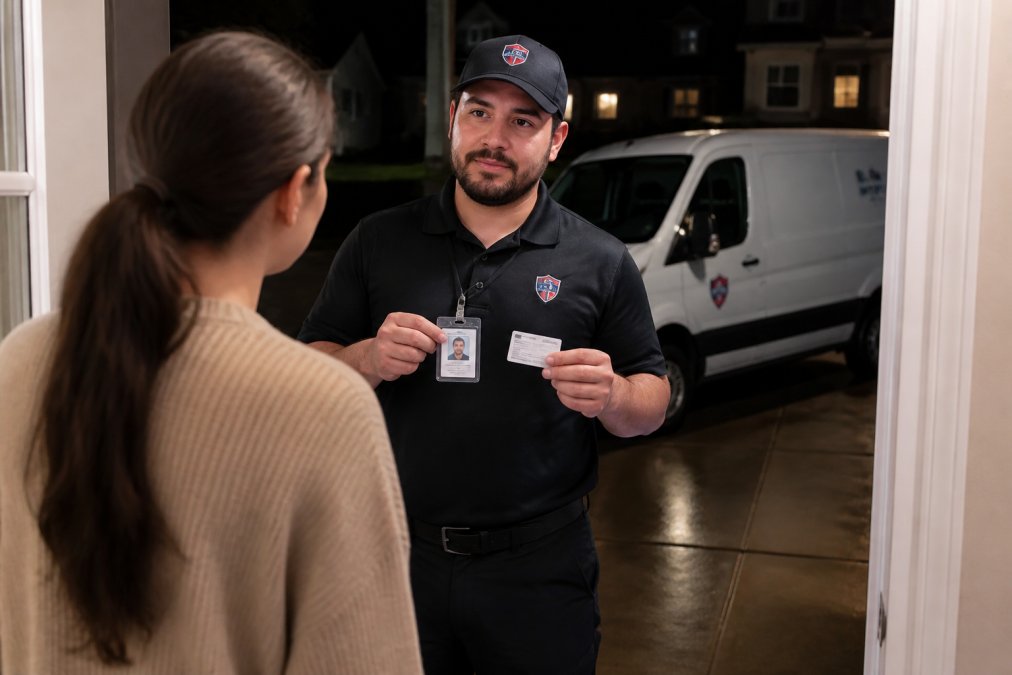
Start with the basics. A legitimate company will confirm its license number and insurance coverage without hesitation. The Better Business Bureau's guidance on hiring service providers recommends checking for a physical address, a verifiable license, and a written estimate before work begins.
Then run a scam-prevention checklist:
- Company has a real local address, not just a call center
- Dispatcher quotes a price range before dispatch
- Technician presents ID and license on arrival
- No demand for cash-only payment
- Written invoice provided after service
If any box goes unchecked, call someone else. The few minutes you lose are worth avoiding a four-figure bill for a simple lockout.
Real-Time Tracking and Pre-Arrival Preparation
Most locksmith websites promise a fast response and then leave you staring at your phone with no idea whether anyone is actually coming. The companies that solve this problem use the same dispatch technology rideshare apps do, and understanding how it works helps you tell a real ETA from a sales script.
How Modern Dispatch Tracking Actually Works
When a locksmith operation runs modern dispatch software, the workflow looks like this:
- The dispatcher logs your address and the job type into a computer-aided dispatch (CAD) system.
- The system assigns the nearest available technician based on live GPS location, not a static territory map.
- You receive a text with a tracking link showing the technician's position and a continuously updated ETA.
- If the technician gets delayed, the ETA refreshes automatically rather than staying frozen at the original promise.
This matters because a static ETA is a guess made at the moment of dispatch. A live ETA accounts for the traffic the technician is actually sitting in. If your provider offers tracking, use it. If they don't, ask for a callback when the technician is en route. That single request closes most of the uncertainty gap.
Not every operation has this technology. Smaller shops may still dispatch by phone and radio, which is not a red flag on its own, but it does mean you should ask for a name and a callback window instead of a tracking link.
What to Have Ready When You Call
Preparation shaves minutes off every visit. A technician who arrives and has to wait while you hunt for a lease agreement or dig a registration out of the glovebox is a technician who is not working on your lock.
Have these ready before or during the call:
- Your exact address, including unit or apartment number and any gate or building access code
- The type of lock or vehicle you're locked out of (deadbolt, knob lock, smart lock, car make and model)
- A photo of the lock or ignition if you can take one
- Proof of residence or vehicle ownership, such as a lease, utility bill, or registration
- A phone number where you'll actually answer, plus a backup contact if your phone is the thing locked in the car
Why Proof of Ownership Matters
A legitimate technician will ask you to prove you live at the address or own the vehicle before they open anything (bbb.org). This is not a delay tactic. It's the same standard licensed professionals follow in other trades, and it protects you as much as it protects them. Have the document ready so the verification step takes seconds instead of minutes.
If a technician never asks for any proof of ownership, treat that as a warning sign rather than a convenience.
Pricing, Service Fees, and Avoiding Scams
Pricing depends on the service, the time of day, and the lock hardware involved, so any provider that quotes a flat number before seeing your situation is guessing. Ask for a range and a written estimate.
Transparent operators publish their pricing structure and confirm it before dispatch. Advanced Keys & Locks LLC builds its service around upfront pricing with no hidden fees. You can review current rates on the Advanced Keys & Locks LLC pricing page.
Watch for these red flags:
| Warning Sign | What It Usually Means |
|---|---|
| Refuses to quote before arriving | Price will be set on-site with no negotiation |
| Cash-only demand | No paper trail, no recourse |
| No license or insurance shown | Potentially unlicensed operator |
| Drills the lock immediately | Unnecessary damage to justify a higher bill |
| Pressure to pay before work finishes | Classic high-pressure scam tactic |
Legitimate providers explain what they're doing before they do it. If a technician starts drilling without walking you through the options, stop them and ask why.
Conclusion
A real 24 hour locksmith response time comes down to one number: how long until a technician is standing at your door. Availability claims are easy; verified arrival windows are not. Before you're locked out, confirm the license, ask for the arrival range in writing, and keep your address and ID ready so the visit moves fast.
Advanced Keys & Locks LLC handles emergency lockouts, automotive key replacement, and residential lock repair with fully certified and insured technicians, upfront pricing, and no hidden fees. When you need real help at 2 AM, you get a straight answer about when it's coming.
Frequently Asked Questions
How long do emergency locksmiths actually take to arrive?
Real 24 hour locksmith response time typically ranges from 20 to 60 minutes in urban areas, though it can stretch to 90 minutes or more in rural locations or during severe weather. The biggest variable is your distance from the nearest available technician. When you call, ask for a specific arrival window and get it in writing via text or email. A legitimate provider will give you a realistic estimate, not a guaranteed number that ignores traffic and dispatch realities.
What factors affect locksmith arrival time the most?
Traffic conditions, weather, your service radius from the dispatch center, and the time of day all play major roles. Rush hour in a dense metro area can double a 20-minute drive. Late-night calls may take longer because fewer technicians are on call. Parking access, gated communities, and unclear directions also add delays. When you call, provide your exact address, cross streets, and any gate or building access codes to help the technician reach you faster.
How can I tell if a locksmith is truly available 24/7?
Call the number at 2 AM and see if a live person answers within a few rings. Ask if they have technicians currently on call in your area. A real 24/7 locksmith will confirm availability and give you a dispatch window. Be wary of call centers that route to random contractors. Ask for the technician's name and license number before they arrive, and verify that information with your state's licensing board. Legitimate providers welcome verification.
What information should I have ready when calling an emergency locksmith?
Have your exact address, cross streets, and any apartment or suite number ready. Know what type of lock you have (deadbolt, knob, smart lock) and whether it is a residential lockout, automotive lockout, or key extraction. Mention if your vehicle is a specific make and model for car lockouts. Provide a callback number and note any gate codes or parking instructions. This preparation can shave 10 to 15 minutes off your total wait time.
Get a quote from Advanced Keys & Locks LLC and know exactly what to expect before the van pulls up.