 how-to
How to Verify Locksmith Certification and Insurance
Table of Contents
- Why Verifying Locksmith Certification and Insurance Matters
- Step 1: Request Proof of License and Verify With Your State
- Step 2: Ask for a Certificate of Insurance and Verify Coverage
- Step 3: Check for Professional Certifications and Industry Credentials
- Red Flags of a Locksmith Scam to Watch For
- Questions to Ask a Locksmith Before Hiring
- Frequently Asked Questions
Last Updated: September 20, 2026
Why Verifying Locksmith Certification and Insurance Matters
When you're locked out of your home or need urgent security work, you call a locksmith. But not every locksmith who shows up is actually qualified to do the job. This is where you need to verify locksmith certification insurance becomes critical.
A locksmith without proper credentials can damage your locks, compromise your security, or disappear after taking your money. Valid certification and insurance protect you and ensure professional work backed by accountability.
You've likely heard stories of sketchy operators claiming credentials they don't have. That's why we help customers understand what to look for when hiring any locksmith.
A poorly executed lockout service can cost thousands in lock replacement. An uninsured locksmith who damages your property leaves you with no recourse. Verification takes minutes but protects you completely.
Step 1: Request Proof of License and Verify With Your State
Ask the locksmith for their license number before they start work. A legitimate professional will hand it over immediately. If they hesitate or can't produce it, stop right there.
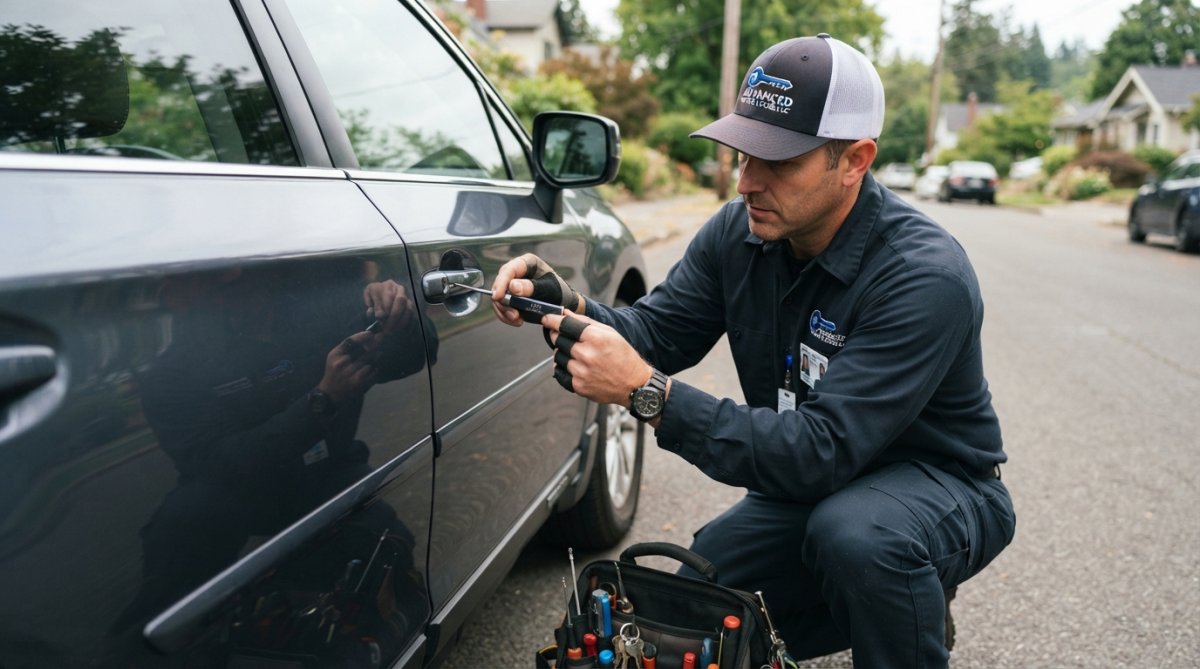
Once you have the license number, verify it directly with your state's regulatory agency. Most states maintain searchable databases of licensed locksmiths. Go to your state licensing board website and enter the number.
Verify the license is current, the name matches the person in front of you, the license type covers your work, and no disciplinary actions are listed. This single step eliminates most scams because fraudsters rarely have real licenses. If your state lacks a public database, call the licensing board directly with the license number.
Step 2: Ask for a Certificate of Insurance and Verify Coverage
A certificate of insurance proves the locksmith carries general liability insurance and workers' compensation, protecting you if something goes wrong. Scammers exploit the fact that many consumers don't recognize fake documents.
Request the Certificate Before Work Begins
Ask for the certificate of insurance before the locksmith touches your locks. Legitimate locksmiths carry this document routinely and will email or print it on the spot. If they say they don't have it or claim insurance isn't necessary, find another locksmith immediately.
What a Real Certificate of Insurance Looks Like
A legitimate certificate of insurance (also called a "Certificate of Liability Insurance" or ACORD form) is printed on official letterhead from an insurance broker or company with professional formatting, not a hastily formatted Word document.
Most legitimate certificates use the ACORD 25-S form, a standardized template. If the certificate looks completely custom or doesn't reference ACORD, it's a red flag.
The certificate should list the locksmith's business name (matching their license), policy number, current effective and expiration dates, insurance company details, and coverage limits. Your address should appear as "Additional Insured." Broker contact information should be clearly visible for verification.
Spot Forged or Outdated Certificates
Scammers often provide fake certificates. Here's how to identify them:
Red flags include: blurry or pixelated images, mismatched business names between certificate and license, expired dates, generic coverage limits, or insurance companies that don't exist online. Search the insurer's name to verify legitimacy.
Verify Coverage Directly With the Insurance Company
Call the insurance company using the phone number on the certificate (not one the locksmith provides) to confirm the policy is active, coverage limits match, and your address is listed as additional insured. Verify it's commercial general liability insurance, not personal homeowner's coverage. Legitimate insurers confirm details immediately.
Understand Minimum Coverage Requirements
Workers' compensation is required if they have employees. Some states require a surety bond protecting customers against theft or fraud. If coverage is significantly lower than standards, ask why. Professionals explain their choices; scammers deflect.
What to Do If Something Goes Wrong
If the locksmith damages your property during the job, file a claim immediately:
- Document the damage with photos and a written description
- Get a repair estimate from another contractor
- Provide the damage documentation and estimate to the locksmith's insurance company
- The insurer will investigate and cover legitimate claims up to the policy limit
Without insurance, you have no recourse. The locksmith can disappear, and you're stuck paying for repairs yourself.
Step 3: Check for Professional Certifications and Industry Credentials
Professional certifications show a locksmith invested in their craft and committed to ongoing education. However, not all credentials are equal, some are self-awarded or meaningless.
Legitimate Professional Certifications
The most respected locksmith certifications come from established organizations with rigorous requirements:
State-Specific Certifications: Some states issue their own locksmith certifications through licensing boards. These are legitimate and often required for licensure. Ask your state licensing board what certifications they recognize.
How to Verify Certifications in Real Time
Don't take a locksmith's word for it. Verify certifications directly:
State locksmithing association databases: Search your state's association website to confirm membership and certification status. Issuing organization websites: If a locksmith claims a certification from an unfamiliar organization, verify it on their website. Legitimate organizations provide easy verification; scam organizations don't.
Ask for the certification card: A legitimate certified locksmith carries a physical or digital card with name, photo, certification type, dates, issuing organization, and credential number. If they can't produce it or it looks homemade, it's not legitimate.
Red Flags: Fake or Meaningless Credentials
Some locksmiths claim credentials that don't exist or are self-awarded. Watch for these:
Red flags include: claiming "certified" without naming the issuer, online-only certifications from unknown organizations, credentials with no database record, "Master" titles without CML credential, or certifications from the locksmith's own company. Ask: "Are you certified?" Third-party certifications matter; in-house training programs don't.
What Certifications Actually Mean for You
A certified locksmith has proven knowledge, passed rigorous exams, committed to ongoing education, agreed to ethics codes, and demonstrated financial stability. This reduces incompetence and unethical work risk. However, certification is not a guarantee, it's one verification step among several, not the only one.
Ask These Certification Questions
When you contact a locksmith, ask:
"What professional certifications do you hold?" Listen for specific names (CRL, CML, CAL) and issuing organizations (ALOA, state association). Vague answers are a warning sign.
"Can you show me your certification card or provide your member number?" A professional will provide this immediately. If they hesitate or say they don't have it handy, verify independently before hiring them.
"How long have you held this certification?" Certifications require renewal. If a locksmith has held a CRL for 15 years, they've renewed it multiple times and stayed current. A brand-new certification might indicate recent training but less experience.
"Do you participate in continuing education?" Certified locksmiths must complete ongoing training to maintain their credentials. Ask what training they've done recently. This shows they stay current on new lock technology and security standards.
These questions take two minutes but reveal whether the locksmith is genuinely committed to professional development or just using marketing language.
Red Flags of a Locksmith Scam to Watch For
Certain warning signs indicate you're dealing with a scam artist, not a professional. Trust your instincts. If something feels off, it probably is.
Stop immediately if you encounter these red flags:
No license or vague credentials, They can't produce a license number or claim they're "licensed in another state." Real locksmiths carry current licenses for the state they work in.
Refusal to show insurance, They say insurance is too expensive or unnecessary. Bonded and insured locksmiths always have documentation ready.
Bait-and-switch pricing, They quote one price on the phone, then demand significantly more when they arrive. Legitimate locksmiths provide transparent pricing upfront.
Pressure to pay in cash only, They refuse credit cards or checks. This makes it harder for you to dispute charges later.
Unmarked vehicle or no company name, A professional locksmith drives a clearly marked vehicle with company contact information visible. Anonymous vans are a classic scam signal.
Unsolicited offers, They knock on your door offering to "check your locks for free" or claim they were in the neighborhood. Real locksmiths respond to calls; they don't solicit door-to-door.
Unwillingness to provide references, Ask for past customer contact information. Professionals have happy clients willing to vouch for them.
Vague about what they'll charge for, They won't break down costs for labor, parts, and service calls. Transparent pricing is a hallmark of legitimate businesses.
Advanced Keys & Locks LLC operates with complete transparency because we know you deserve honesty. We provide upfront pricing with no hidden fees. Our certifications and insurance are always available for verification.
Questions to Ask a Locksmith Before Hiring
Before you commit to hiring any locksmith, ask these questions. Their answers reveal whether they're professional and trustworthy.
"Can you show me your license and insurance?", This is the baseline question. If they hesitate or can't answer immediately, move on.
"What's your actual response time?", Many claim 24/7 service but take hours to arrive. Ask for a realistic timeframe and get it in writing.
"Will you provide an itemized quote before starting work?", Professional locksmiths break down labor, parts, and service fees separately. Vague estimates are a warning sign.
"Are you bonded and insured?", Bonded coverage protects you if the locksmith steals from you. Insurance covers damage they cause. Both matter.
"How long have you been in business?", Established locksmiths have track records and customer reviews. New operations might lack experience.
"Do you have any professional certifications?", Ask which ones and request proof. This shows commitment to the profession.
"Can you provide references from recent customers?", Call at least two. Ask about their experience and whether they'd hire the locksmith again.
"What's your cancellation policy?", If you change your mind, can you cancel without penalty? Legitimate locksmiths are flexible.
Frequently Asked Questions
How do I verify locksmith certification and insurance online?
Request the locksmith's license number and contact your state's licensing board directly to confirm it's active and in good standing. For insurance, ask for a certificate of insurance and call the insurance company listed to verify the policy is current. Cross-reference the business name on all documents to ensure they match.
What locksmith insurance requirements should I check for?
Look for general liability insurance covering damage to property and workers' compensation insurance if they employ staff. Request a certificate of insurance showing the policy number, coverage limits, and expiration date. Verify the locksmith is bonded and insured before allowing them access to your property or vehicle.
What are the red flags of a locksmith scam?
Be cautious of locksmiths who refuse to provide a license number, quote prices over the phone without seeing the lock, or demand cash payment before work is complete. Scammers often claim inflated emergency fees or refuse to provide written estimates. Avoid those who pressure you to pay upfront or won't provide proof of insurance. Legitimate professionals always carry credentials and can verify their background.