 ultimate-guide
Why Switch to Professional Locksmiths: Security Guide
Table of Contents
- The Hidden Risks of DIY Lock Work and Bargain Technicians
- How to Verify a Licensed Locksmith Before You Let Them In
- What Professional Locksmiths Actually Do That DIY Kits Cannot
- The Real Cost of Professional Locksmith Services vs. Hidden Damage
- Insurance, Liability, and Why Your Policy May Require a Pro
- Residential vs. Commercial Security: When You Need Professional Locksmiths
- Conclusion: Making the Switch Without Getting Burned
- Frequently Asked Questions
Last Updated: September 25, 2026
The Hidden Risks of DIY Lock Work and Bargain Technicians
A licensed locksmith is a technician who has passed a criminal background check, carries liability insurance, and can prove their credentials through state or local licensing and membership in a recognized locksmith association. That definition matters because the alternative, an unvetted bargain technician, is where most lock disasters begin. This guide from Advanced Keys & Locks LLC breaks down exactly why switching to professional locksmiths protects your property, your wallet, and your peace of mind.
DIY lock picking tutorials make it look simple. They are not.
A common mistake is treating a jammed deadbolt or a stuck ignition like a minor inconvenience you can fix with a $20 kit from a big-box store. In practice, that kit often causes more harm than the original problem. Lock picking requires feel, patience, and years of practice. Amateurs routinely snap tension wrenches inside keyways, bend pins, and scar cylinder housings. Once the internal mechanism is compromised, the lock is no longer a lock. It is a decoration that any determined intruder can defeat.
The bargain technician carries a different set of risks. Some operate without a license, without insurance, and without a fixed business address. They quote low on the phone, arrive in an unmarked vehicle, and pressure you into paying far more once the work is done. The security integrity of your home or business is not their concern. Your wallet is.
How to Verify a Licensed Locksmith Before You Let Them In
Verification starts before anyone touches your door. Ask for a license number, confirm it with the issuing authority, and request proof of insurance. A legitimate professional will hand over credentials without hesitation. A scammer will stall, deflect, or claim the paperwork is "in the truck."
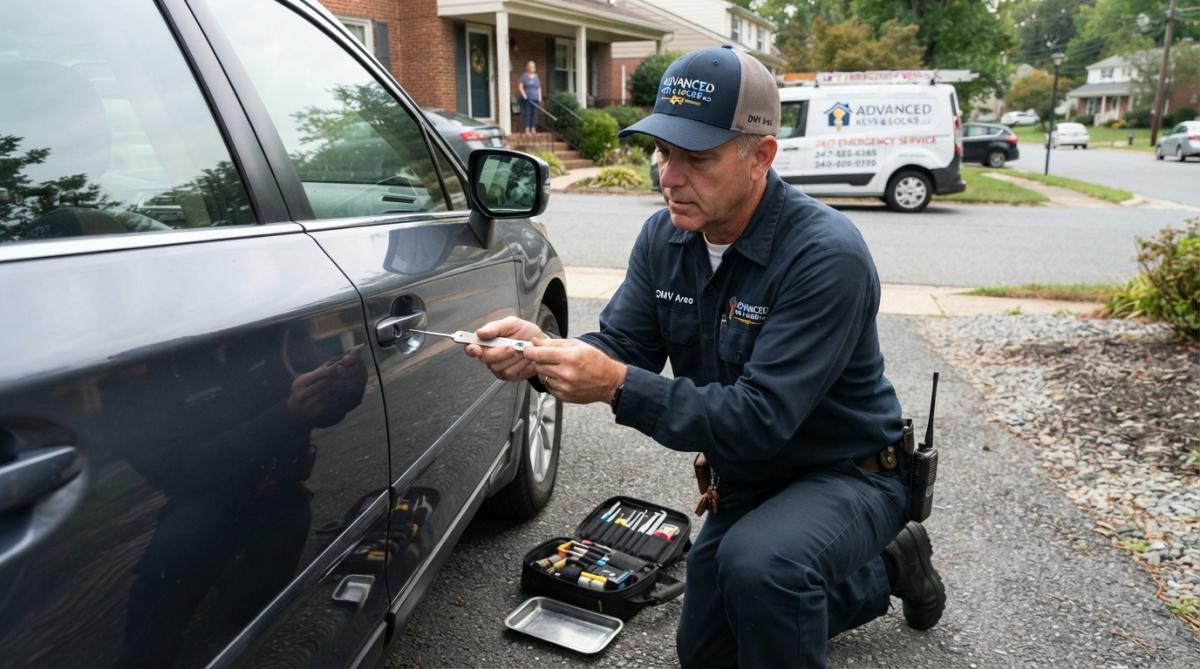
Here is a practical checklist you can run through in under five minutes:
- Ask for the technician's full name and license number before they arrive
- Cross-check that number against your state or local licensing database
- Request a written quote with a line-item breakdown, not a verbal estimate
- Confirm the company carries general liability and workers' compensation coverage
- Look for membership in a recognized locksmith association
- Verify the business address matches the vehicle and the invoice
- Never pay in full before the work is complete and tested
The Federal Trade Commission's consumer guidance on avoiding service scams recommends getting quotes in writing and never paying upfront for services you have not received. That advice applies directly to lock work, where urgency is often used as a pressure tactic.
What most guides miss is that credentials vary by jurisdiction. Some states license locksmiths at the state level; others leave it to counties or cities. A licensed technician in one area may have no standing in another. Always verify against the authority that actually governs your location.
What Professional Locksmiths Actually Do That DIY Kits Cannot
Professional locksmithing is a technical trade, not a hobby. The work ranges from emergency lockout entry and key extraction to master key system design, access control installation, and high-security lock hardware specification. None of that is achievable with a consumer kit and a YouTube tutorial.
Consider a master key system for a commercial building. It requires mapping every door, defining which keys open which locks, selecting hardware that supports the hierarchy, and documenting the system so it can be maintained. Get the math wrong and you either lock staff out of areas they need or hand them access they should never have.
Automotive work is its own discipline. Key fob programming, transponder key cutting, and ignition repair require diagnostic equipment that costs more than most DIY kits combined. A locksmith trained on these systems can program a replacement fob in minutes. An amateur with a cheap programmer can brick the vehicle's immobilizer, turning a lockout into a tow to the dealership.
Smart lock integration adds another layer. These devices combine mechanical hardware with firmware, wireless protocols, and app-based access management. Installing one correctly means understanding both the physical door prep and the digital security configuration. A misconfigured smart lock can expose your home network or leave a backdoor open that no key ever touched.
The Real Cost of Professional Locksmith Services vs. Hidden Damage
The cost of professional locksmith services is not just the invoice. It is the invoice compared against what DIY or a cut-rate technician costs you afterward, and the comparison rarely favors the cheap option.
Start with what actually drives a legitimate quote.
Now run the real math on the alternatives:
| Scenario | Upfront Cost | Likely Hidden Cost | Real Outcome |
|---|---|---|---|
| DIY lock picking attempt | Low kit purchase | Cylinder and frame damage | Full lock replacement |
| Unlicensed bargain technician | Low phone quote | Inflated on-site charges | Disputed invoice, no recourse |
| Professional locksmith | Upfront written quote | None if scope is clear | Working lock, documented service |
The pattern is consistent. Cheap upfront pricing shifts the real cost to later, and the later cost is always higher. A professional locksmith quotes the job, performs the job, and stands behind the work. That predictability is the actual product, and it is the only version of the transaction where you know the final number before anyone touches your door.
Insurance, Liability, and Why Your Policy May Require a Pro
Homeowners and business insurance policies frequently include clauses about how locks and security hardware must be maintained. Some insurers require that lock installation and repair be performed by a licensed professional, particularly for commercial properties or high-value residential coverage. If a claim arises after unlicensed work, the insurer may deny it or reduce the payout.
Residential vs. Commercial Security: When You Need Professional Locksmiths
Emergency response is where the difference shows most. A 24/7 locksmith service with certified, insured technicians can respond to a 2 a.m. lockout or a failed commercial lock without the guesswork. Availability, credentials, and clear pricing are what separate a reliable provider from a phone number that rings and rings.
Conclusion: Making the Switch Without Getting Burned
The switch to professional locksmiths is not about paying more. It is about paying once, correctly, and knowing the work will hold. DIY attempts and unlicensed technicians trade a lower upfront number for damage, disputes, and security gaps that cost far more to fix.
Frequently Asked Questions
How do I know if a locksmith is reputable and not running a scam?
Ask for their state license number and proof of insurance before they start work. A reputable professional locksmith will provide a physical business address, a written estimate, and a uniformed technician with proper credentials. Avoid anyone who answers the phone with a generic greeting, quotes an unusually low price, or demands cash only. Check that they belong to a recognized locksmith association and verify their license through your state's consumer protection agency. If they refuse to show identification or pressure you into immediate payment, walk away and call someone else.
What are the risks of attempting DIY lock repairs or using aftermarket tools?
DIY lock picking and repair often causes permanent damage to the lock cylinder, door frame, or deadbolt mechanism. A damaged lock can leave your home vulnerable to unauthorized access because the internal pins no longer align correctly. Aftermarket key fob programming tools can also corrupt your vehicle's immobilizer system, leading to costly dealer repairs. Beyond property damage, improper lock installation may void your homeowner's insurance coverage if a break-in occurs. Professional locksmiths use calibrated locksmith tools and follow manufacturer specifications, which preserves both your security integrity and your warranty.
Does homeowners insurance require professional locksmith services after a break-in?
Many homeowner insurance policies require that locks be installed or repaired by a licensed technician to maintain liability coverage. If you file a claim after a break-in and the adjuster discovers DIY lock work or unpermitted modifications, the insurer may deny or reduce your payout. Some policies also specify that only professional locksmith services qualify for reimbursement of lock replacement costs. Check your policy documents or call your insurer to confirm their requirements. Keeping receipts and documentation from a certified locksmith provides proof that the work meets insurance standards.
How much does it cost to hire a professional locksmith compared to the damage from a failed DIY attempt?
The cost of professional locksmith services depends on the job type, time of day, and hardware required. Emergency lockout service, lock rekeying, and key duplication each carry different pricing structures. Advanced Keys & Locks LLC publishes upfront rates on its website with no hidden fees, so you know the price before work begins. Compare that to the potential cost of a damaged deadbolt, a broken door frame, or a corrupted car immobilizer, which can run several times the price of a professional service call. Getting a quote first protects your budget.