 how-to
Do All Car Keys Need to Be Programmed? A Practical Guide
Last Updated: October 25, 2026
Quick Summary
No, do all car keys need to be programmed is answered simply: a basic mechanical key with no chip or remote buttons only needs to be cut to match your lock. However, most cars built since the late 1990s use a chip or smart key that must be matched to your vehicle before the engine will start.
- A transponder key carries a chip that must answer the car's immobilizer signal or the engine stays dead.
- Fob remote buttons and the immobilizer chip are programmed separately, so pairing buttons does not program the chip.
- Onboard self-programming typically needs at least one working key and often applies to late 1990s through mid-2000s vehicles.
- Programming itself usually takes under an hour once the correct key and equipment are on hand.
- With no working key, onboard self-programming is off the table and the immobilizer must be reset.
Table of Contents
- The Short Answer: Which Car Keys Actually Need Programming
- How Immobilizer Systems Decide Whether Your Key Starts the Engine
- Transponder Key Programming: What the Chip Does and When It Needs a Match
- Key Fob Programming: Pairing Remote Buttons Separately From the Immobilizer
- DIY vs. Dealer Programming: Onboard Sequences, Working Keys, and When You Need a Locksmith
- Car Key Programming Cost: What Drives the Price Up or Down
- How Long Does Car Key Programming Take From Start to Finish?
- When All Keys Are Lost: Verification, Compatibility, and Your Next Step
- Frequently Asked Questions
The Short Answer: Which Car Keys Actually Need Programming
No, not all car keys need to be programmed. A basic mechanical key with no chip and no remote buttons only needs to be cut to match your lock. But most cars built since the late 1990s use a chip or smart key that must be matched to your vehicle before the engine will start. Cutting is physical, programming is electronic, and only some keys need both.
Mechanical Keys vs. Transponder and Smart Keys
A mechanical key is a plain piece of cut metal. It turns the ignition cylinder and opens the doors. No electronics, no programming.
A transponder key carries a small chip in the head. The chip answers a signal from the car's immobilizer.
A smart key or proximity fob works without inserting anything. The car detects the fob nearby and allows push-button start.
So do all car keys need to be programmed? Only the ones with electronics inside.
How Immobilizer Systems Decide Whether Your Key Starts the Engine
An immobilizer is a vehicle security system that checks for a recognized key chip before allowing the engine to start. When you turn the ignition, the car's electronic control unit sends a signal.
This is why a copied metal key can open your door and still fail to start the car. The cut is right. The chip is missing or unmatched. Key recognition happens in seconds, and it happens every single time you start the vehicle.
Transponder Key Programming: What the Chip Does and When It Needs a Match
Transponder key programming is the process of pairing a key's chip to your vehicle's immobilizer so the engine will start. A new blank key arrives uncut and unmatched. Cutting makes it fit the lock.
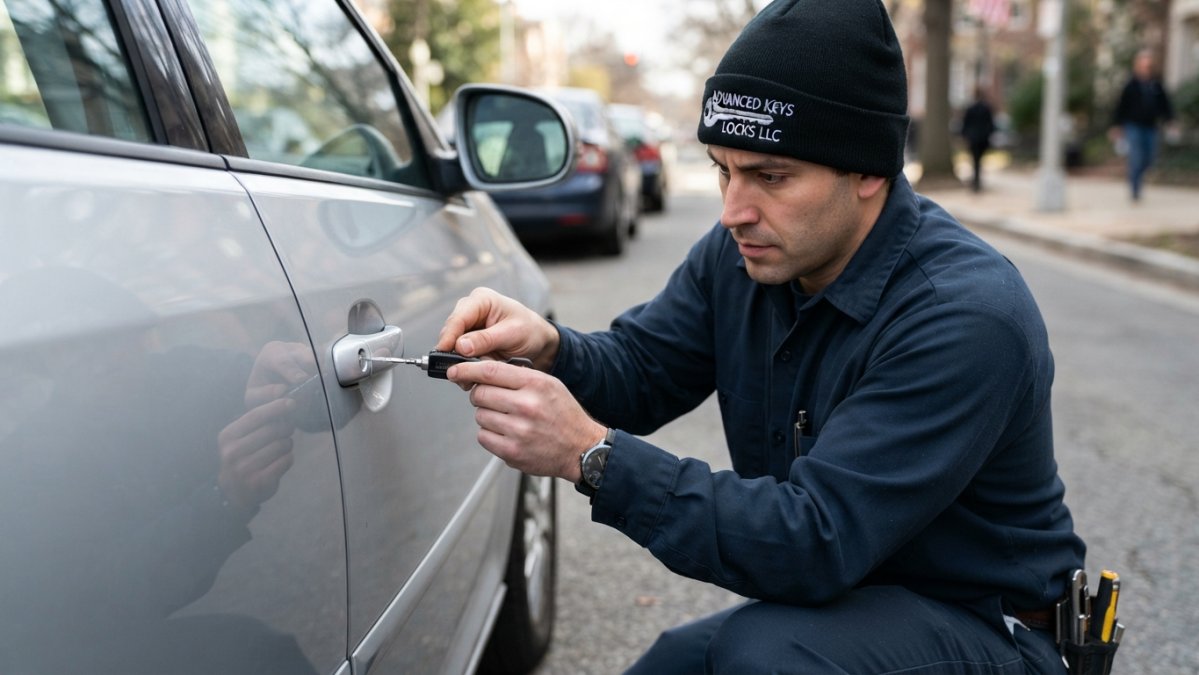
When does a key need this match?
- Any newly purchased replacement or spare transponder key
- A key whose chip was damaged or wiped
- A vehicle that has had its immobilizer or engine control unit replaced
A common mistake is buying a cheap blank online and assuming it will work. For a full walkthrough of pairing a fob to the vehicle, see our guide on how to program car key fob.
Key Fob Programming: Pairing Remote Buttons Separately From the Immobilizer
Here is the part most guides get wrong: a fob does two jobs, and they are programmed separately.
The immobilizer chip lets the engine start. The remote buttons lock and unlock the doors. Pairing the buttons does not program the chip, and programming the chip does not fix dead buttons.
That distinction matters when you replace a fob battery. Our guide on how to reset car key fob after battery change covers that reset step by step.
DIY vs. Dealer Programming: Onboard Sequences, Working Keys, and When You Need a Locksmith
Whether you can program a key yourself comes down to three variables: the key type, the vehicle's model year, and how many working keys you still have. Onboard self-programming is often the exception, not the rule, and it is almost always limited to older transponder systems.
When Onboard Self-Programming Actually Works
Onboard programming, sometimes called self-programming or the add-a-key sequence, means the vehicle teaches itself the new key using the ignition and your existing working keys. It typically requires:
- At least one working, already-programmed key to start the sequence. Some systems require two.
- A model year roughly in the late 1990s through the mid-2000s for many domestic and Asian brands, though this varies widely by make.
- A specific ignition-cycling sequence, turn on, off, on, off within a set number of seconds, then insert the new key. The exact timing and steps differ by make, model, and year, and the procedure is usually printed in the owner's manual.
If any of those conditions is missing, onboard programming is off the table. A common pattern is a 2010s or newer vehicle with a smart key, those almost never accept a DIY sequence and require a diagnostic tool.
What a Locksmith or Dealer Actually Does
When onboard programming is not available, the job moves to a professional with a diagnostic tool that can access the immobilizer or body control module. That tool performs two jobs: it pulls the vehicle's security credentials, and it writes the new key into the authorized-key memory.
- A mobile locksmith brings the tool and the blanks to your location. This is often the fastest route when the car is immobile, because it avoids a tow. Ask whether the locksmith carries the specific blank and tool for your make and model before booking.
- A dealer has factory-level access and the correct blanks on hand, but usually requires an appointment and may need the vehicle for part of a day. Dealer service departments may charge a diagnostic or programming fee on top of the key cost.
The Trade-Offs in Plain Terms
| Route | Best For | Main Limitation |
|---|---|---|
| DIY onboard sequence | Older vehicles with one or two working keys | Only works on certain makes, models, and years; no working key means no DIY |
| Mobile locksmith | Lockouts, all-keys-lost, and one-visit convenience | Availability varies by area; confirm the blank and tool before booking |
| Dealer | Newer vehicles and factory-level security | Appointment, higher labor rate, and possible multi-day turnaround |
For a full walkthrough of pairing a fob to the vehicle, see our guide on how to program car key fob.
Car Key Programming Cost: What Drives the Price Up or Down
Car key programming cost depends on four things: the key type, the vehicle's make and model, the model year, and who does the work. Pricing depends on quantity, dates, and delivery, so treat any figure as a planning range rather than a quote.
The Four Cost Drivers
- Key type: a plain mechanical key is cheapest because there is nothing to program. A transponder key adds the cost of the chip and the programming step. A smart or proximity fob is the most expensive because the fob itself costs more and the programming is more involved.
- Vehicle make and model: luxury and newer models often need more setup time and sometimes a security code that must be pulled from the manufacturer. That adds labor.
- Model year: older vehicles are usually simpler to program, and some allow onboard self-programming that costs nothing beyond the key itself.
- Provider: dealers typically charge more than mobile locksmiths for the same task because of higher labor rates and diagnostic fees. A mobile locksmith may charge a service-call fee but can often do the job in one visit.
Typical Planning Ranges
The total cost, key plus cutting plus programming, can fall into rough bands. These are planning ranges, not quotes, and they vary by vehicle and market:
| Route | Typical Planning Range (Key + Cut + Program) | Notes |
|---|---|---|
| Mechanical key only | Under $50 | Cut only; no programming |
| Transponder key, locksmith | Roughly $75-$200 | Varies by blank and vehicle |
| Transponder key, dealer | Roughly $150-$300+ | Diagnostic fee often added |
| Smart / proximity fob, locksmith | Roughly $200-$400 | Fob cost is the main driver |
| Smart / proximity fob, dealer | Roughly $300-$600+ | Highest labor and parts cost |
Time Cost, Not Just Money
Programming itself usually takes under an hour once the correct key and equipment are on hand. The real time sink is the key: if the blank has to be ordered or cut first, add that to the clock.
For a detailed breakdown of why quotes differ, read our 2026 price guide on key fob programming costs. If you are weighing a full replacement, our 2026 lost car key fob replacement prices give you concrete figures to compare.
How Long Does Car Key Programming Take From Start to Finish?
Key programming jobs can take under an hour once the correct key and equipment are on hand. A simple transponder match can be quick.
The real time sink is usually the key itself. If the blank has to be ordered or cut first, add that to the clock. A mobile locksmith who arrives with the right blanks and tools finishes in one visit.
When All Keys Are Lost: Verification, Compatibility, and Your Next Step
Losing every key changes the job. With no working key, onboard self-programming is off the table. The vehicle has to be accessed, a new key cut, and the immobilizer reset to accept it.
Two things slow this down:
- Proof of ownership. A reputable locksmith will ask for your vehicle identification number and documents showing the car is yours. This protects you.
- Key compatibility. The blank must match your exact make, model, and year. A key that fits the ignition but not the chip still will not start the car.
If you are locked out right now with no keys at all, our guide on getting an emergency locksmith for lost car keys walks through what to do fast.
Frequently Asked Questions
Will a non-programmed key start a car?
It depends on the key type. A basic mechanical key with no chip will start an older vehicle that has no immobilizer, because it only needs the correct cut. A transponder or smart key that has not been programmed to the vehicle will usually turn in the ignition but fail to start the engine, since the immobilizer will not recognize the chip. If your car has a push-button start, an unprogrammed fob typically will not let the engine start at all.
Can I reprogram my car key myself?
Sometimes. Many vehicles allow onboard programming if you already have at least one working key, using a sequence of ignition turns or button presses described in the owner's manual. Vehicles that require two working keys, or that need a diagnostic tool to access the security code, are not DIY-friendly. If you have no working key, self-programming usually is not possible and you will need a locksmith or dealer with the right equipment.
Do car key fobs need to be programmed to a specific vehicle?
Yes. A replacement fob must be paired to your vehicle's remote keyless entry system so the buttons lock, unlock, and open the trunk on command. That pairing is separate from immobilizer programming, which lets the chip start the engine. Some fobs handle both jobs, so a single visit may cover remote pairing and transponder key programming. Bring your vehicle identification number and proof of ownership so the technician can confirm compatibility before pairing.
Can a locksmith program a replacement car key?
Most automotive locksmiths can cut the key and program transponder chips and fobs for a wide range of makes and models, often at your location and often for less than a dealer. The catch is equipment: some newer vehicles use proprietary systems that only the dealer can access. Ask ahead of time whether the locksmith supports your vehicle year and model, and confirm the quote covers cutting, programming, and any service call.
So do all car keys need to be programmed? Only the ones with a chip or remote, and that covers most modern vehicles. If you are facing a dead fob, a lost key, or a blank that will not start the car, guessing gets expensive. Advanced Keys & Locks LLC offers 24/7 availability, upfront pricing with no hidden fees, and certified, insured locksmiths who handle key fob programming on site. Get a quote from Advanced Keys & Locks LLC and get your key matched and working the same day.