 how-to
How to Rekey Rental Apartment Locks: Landlord Guide
Table of Contents
- Why Rekeying Rental Apartment Locks Beats Replacing Them
- Landlord Tenant Lock Laws: What You Can and Cannot Do
- Step-by-Step: How to Rekey Rental Apartment Locks
- DIY Rekeying Kits vs. Hiring a Professional Locksmith
- Apartment Lock Replacement Cost: What to Budget
- Best Smart Locks for Renters and Property Managers
- Common Mistakes and Insurance Implications
- Conclusion
- Frequently Asked Questions
Last Updated: September 10, 2026
Why Rekeying Rental Apartment Locks Beats Replacing Them
Rekeying rental apartment locks is the practice of changing the internal pin configuration of an existing lock cylinder so old keys stop working, rather than removing and discarding the whole lock body. This guide walks property managers and owners through the legal limits, the tools, and the real costs of how to rekey rental apartment locks between tenants. Rekeying keeps the deadbolt, cylinder, and hardware you already own and changes only the pins inside. That distinction matters more than most landlords realize.
Rekeying vs. Replacing Locks: A Cost and Security Comparison
Rekeying preserves the existing hardware and swaps the pin stack, while replacement discards the cylinder or the entire lockset. For a turnover, rekeying usually wins on both time and money.
| Factor | Rekey Existing Lock | Replace Lock |
|---|---|---|
| Parts needed | Pins, springs, key blanks | Full cylinder or lockset |
| Time per lock | 15-30 minutes | 30-60 minutes |
| Hardware match | Original finish kept | May not match existing |
| Best for | Same hardware, new tenant | Worn or damaged hardware |
A common mistake is replacing a perfectly sound deadbolt just because the tenant left with the keys. If the cylinder turns smoothly and the bolt extends fully, rekeying solves the problem.
Landlord Tenant Lock Laws: What You Can and Cannot Do
Landlord tenant lock laws vary by state, but the general principle is consistent: a landlord may change or rekey locks, yet must give the tenant a working key and cannot use the change to lock a tenant out. Locking a tenant out without following the legal eviction process is prohibited in every state (usa.gov).
A rekey is a security measure, not an eviction tool. Keep it that way.
Lease Agreement Clauses Every Landlord Needs
A lease agreement clause that states locks may be rekeyed at turnover, and that tenants must return all keys and fobs, prevents disputes before they start. Include a line requiring tenants to report lost keys promptly, since a lost key is the most common reason for an emergency rekey.
Tenant Rights and Emergency Access Rules
Tenants generally have a right to a working key and to quiet enjoyment of the unit. Landlords typically must give notice before entering except in a genuine emergency. Build an emergency access procedure into your records so a burst pipe at 2 a.m. does not turn into a legal problem.
state landlord-tenant statutes and lock-change rules
Step-by-Step: How to Rekey Rental Apartment Locks
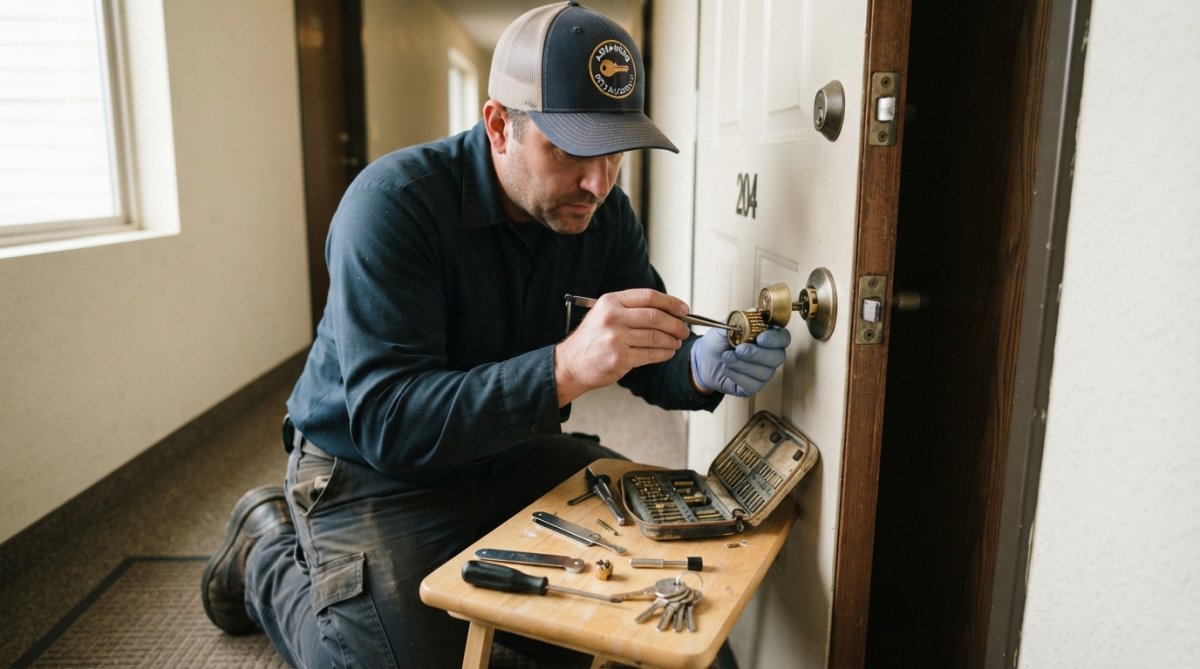
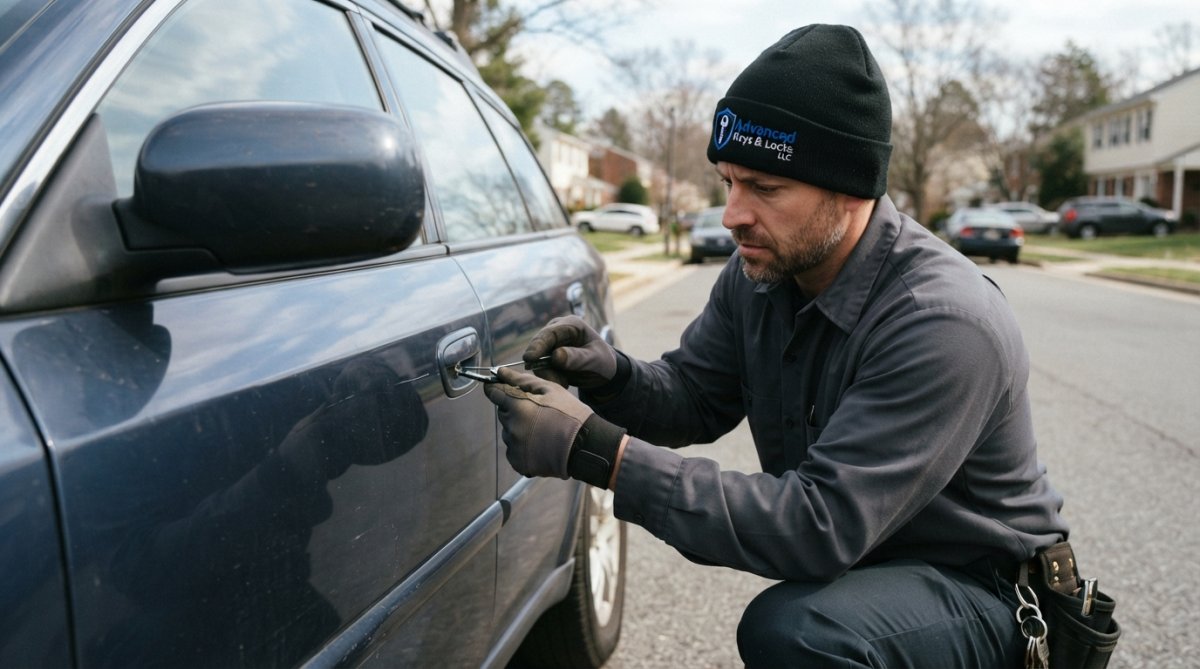
Rekeying a standard pin-tumbler cylinder means removing the cylinder, extracting the plug, replacing the pins to match a new key, and reassembling. Most residential deadbolts follow the same basic sequence, but the details diverge sharply by brand and by cylinder type, and that is where most first-time attempts fail.
What You'll Need Before You Start
Gather these before you touch the lock:
- A rekeying kit matched to the lock brand (Kwikset, Schlage, and Defiant each use different pin kits and followers)
- A plug follower tool sized to the cylinder diameter
- The new key and matching key blank
- A pinning chart for the brand, Schlage and Kwikset publish theirs openly; off-brands often do not
- A screwdriver set and a clean tray for small parts
- A cylinder removal tool or the original mounting screws, which vary by deadbolt model
Compatibility: Which Locks You Can Actually Rekey
Before you buy a kit, confirm the lock is consumer-rekeyable. The table below reflects the general pattern most practitioners see in residential hardware:
| Lock brand / type | Consumer-rekeyable? | Notes |
|---|---|---|
| Kwikset standard (KW1 keyway) | Yes | SmartKey cylinders rekey with a dedicated tool, no pins |
| Schlage standard (SC1 keyway) | Yes | Standard pin kit and follower work |
| Defiant, Gate House, generic | Usually | Pin kits vary; check the keyway stamp |
| Medeco, Mul-T-Lock, ASSA | No | Restricted keyways require proprietary pins and dealer tools |
| Most smart locks (August, Yale, Schlage Encode) | No | Rekeying is replaced by code management, not pins |
| Commercial-grade cylinders (Best, Corbin Russwin) | No | Often part of a master key system; dealer service required |
If your unit uses a restricted keyway, a generic kit will not work, you either order brand-specific pins through an authorized dealer or call a locksmith. This is the single most common reason a DIY rekey stalls halfway through.
Disassembly, Pin Replacement, and Reassembly
- Remove the cylinder from the deadbolt housing. On most residential deadbolts, that means removing the interior thumb-turn plate and the two through-bolts.
- Insert the follower tool to push the plug out without scattering the springs. Keep the follower pressed against the plug the entire time, the moment you pull it back, springs launch.
- Note the existing bitting, then remove the old pins. Lay them in order on your tray so you can reverse the process if the new key does not work.
- Install new pins matching the new key's bitting. Bottom pins sit under the springs; driver pins sit above. Reversing them is the most common assembly error.
- Slide the plug back in behind the follower. The follower pushes the springs and drivers back into the bible as the plug enters.
- Test the new key, then reinstall the cylinder. If the key sticks, remove the plug and recheck pin order before forcing it.
Expected result: the old key no longer turns, and the new key operates the deadbolt smoothly.
Master Key Systems: When DIY Stops
If the building uses a master key system, one key for common areas, individual keys for units, do not attempt a DIY rekey. Master keying requires a pinning chart that maps every key in the system, and a single wrong pin can either lock out other units or grant unintended access. This is the most significant gap in most online guides: they treat every cylinder as standalone, when multi-unit buildings rarely are. For any property with more than a handful of units, confirm with the hardware supplier or a locksmith whether the cylinder is master-keyed before you open it.
DIY Rekeying Kits vs. Hiring a Professional Locksmith
A rekeying kit suits a landlord with one or two matching locks and the patience to learn the pinning chart. A locksmith makes sense for multiple units, mismatched brands, or a proprietary keyway that resists standard kits. The decision usually comes down to three variables: how many locks, how many brands, and whether the cylinders are master-keyed.
The Real Cost Math
A consumer rekeying kit typically runs in the range of a few tens of dollars and covers one brand's pin set. A single locksmith service call for one lock usually carries a trip charge plus per-lock labor, so the per-door cost drops sharply as you add doors on the same visit. The crossover point most landlords hit is around the second or third lock: below that, DIY is cheaper; above it, the shared trip charge usually makes a professional visit the better value, especially once you account for the time to learn a pinning chart and the risk of a botched reassembly.
When DIY Is the Right Call
- One or two locks of the same brand and keyway
- Standard Kwikset or Schlage residential cylinders
- No master key system in the building
- You are comfortable with small parts and can work without rushing
When to Hire a Professional Locksmith
- Three or more locks, or a turnover schedule that batches units
- Mixed brands across units, which means multiple pin kits
- Restricted or proprietary keyways (Medeco, Mul-T-Lock, ASSA, Best)
- Master-keyed cylinders anywhere in the building
- High-security or commercial-grade hardware
- Any lock that is also being upgraded to a smart lock at the same time
The Proprietary Keyway Problem
What most guides miss is the proprietary keyway problem. Some hardware uses restricted keyways that a generic kit cannot service, so you either buy brand-specific pins through an authorized dealer or call a professional. Restricted keyways exist specifically to prevent unauthorized duplication, which means the pin stock is not sold at general retail. If you cannot identify the keyway stamp on the cylinder, assume it is restricted until proven otherwise.
Insurance and Documentation
Whichever path you choose, document it. A dated log of every rekey, who performed it, which cylinders were serviced, which keys were collected, and when access codes changed, is the record an insurer will ask for if a claim ever questions access control. A DIY rekey with no paper trail is weaker evidence than a professional invoice, which is a real, if unglamorous, argument for hiring out on units where liability exposure is highest.
Apartment Lock Replacement Cost: What to Budget
Apartment lock replacement cost depends on whether you rekey or replace, how many locks are involved, and the hardware brand. Because pricing varies by quantity and hardware, request a quote rather than relying on a single flat figure. Advanced Keys & Locks LLC provides upfront quotes, so you can budget a turnover without surprise fees.
Best Smart Locks for Renters and Property Managers
Smart locks let you issue and revoke access codes without physically rekeying, which is a genuine advantage for short-term rentals and frequent turnover. For renters, a retrofit smart lock that fits over the existing deadbolt avoids modifying the door. For property managers, a model with an audit trail and scheduled codes reduces key handling across many units.
Compatibility and Master Key Systems
Before buying, check a compatibility matrix: door thickness, backset, and existing deadbolt brand. A master key system lets one key open common areas while individual keys open only specific units, which simplifies management across a portfolio. Confirm the lock supports master keying before you commit.
smart lock security and access guidance
Common Mistakes and Insurance Implications
The most common mistakes are rekeying without documenting it, failing to collect every old key, and ignoring the insurance implications of unrecorded access. Insurers may question a claim if access control was clearly neglected, so keep a simple log of every rekey, who holds keys, and when codes change. A documented rekey protects you twice: once against a break-in, and once against a denied claim.
Conclusion
Turnover season exposes every gap in your key control, and a documented rekey closes most of them. Advanced Keys & Locks LLC handles residential rekeys, smart lock installation, and master key systems across the DMV area with certified, insured technicians, upfront pricing, and 24/7 availability for emergencies. Get a quote from Advanced Keys & Locks LLC and secure every unit before the next tenant moves in.
Frequently Asked Questions
Can I legally change the locks on a rental property without telling my landlord?
No. Most states require tenants to give landlords a copy of any new key or to obtain written permission before changing locks. Landlord tenant lock laws vary by state, but changing locks without notice can violate your lease and lead to eviction. If you are a landlord, you must follow local notice requirements and provide tenants with a key. Always check your lease agreement and state law before rekeying rental locks.
What locks cannot be rekeyed?
Most standard deadbolts and knob locks with a cylindrical pin tumbler design can be rekeyed. Locks that cannot be rekeyed include certain high-security models with proprietary keyways, some smart locks with sealed electronic cylinders, and older mortise locks that lack removable cylinders. If your lock uses a non-standard keyway or is a sealed unit, replacement is usually the only option. A locksmith can confirm whether your hardware is rekeyable.
Is it cheaper to rekey or replace apartment locks?
Rekeying is almost always cheaper than replacement because you keep the existing hardware and only change the pins. Apartment lock replacement cost includes the new lock body, cylinder, and installation, while rekeying typically charges for labor and a small kit. For multiple units, rekeying saves more. However, if the lock is damaged, outdated, or you want smart lock features, replacement may be the better long-term investment.
What are the risks of DIY lock rekeying?
DIY rekeying can go wrong if you lose the pins, bend the springs, or reassemble the cylinder incorrectly, which can leave the lock jammed or insecure. Without a follower tool and proper bitting information, you may not match the new key correctly. A bigger risk is legal: if you rekey a rental without landlord approval, you could breach your lease. For tenants, hiring a professional locksmith is safer and ensures compliance.