 how-to
Are Landlords Legally Required to Change Apartment Locks?
Last Updated: November 1, 2026
Quick Summary
No federal law sets apartment lock change deadlines, so legal requirements for apartment locks come from state statutes, county codes, and city ordinances that vary by location. Many states require landlords to rekey or change locks at turnover, and some also require it after a lost key or break-in.
- Federal law does not set apartment lock change deadlines, key-handling rules, or deadbolt specifications.
- A safe habit is to rekey every unit at every turnover, even without a state deadline.
- Renters usually cannot change the locks themselves without written landlord permission.
- Locks must still allow exit from the inside without a key, so double-cylinder deadbolts are often restricted.
- Who pays for a broken lock depends on the cause: normal wear is the landlord's responsibility.
Table of Contents
- Why Apartment Lock Rules Vary by State and City
- Landlord Lock Change Requirements: What the Law Typically Mandates
- Tenant Rights for Apartment Locks: What Renters Can Demand
- Apartment Lock Change Permission: When a Renter Can Swap the Hardware
- Apartment Deadbolt Requirements: Codes, Throw Depth, and Hardware
- Who Pays and Who Repairs a Broken Apartment Lock
- Getting Your Apartment Locks Compliant and Documented
- Frequently Asked Questions
Why Apartment Lock Rules Vary by State and City
No federal law tells a landlord when to change the locks on a rental unit.
A landlord in one state may face a firm deadline to rekey after a tenant moves out; across the line, no explicit deadline may exist.
Renters want control over who holds a key; landlords want to protect the property and avoid unnecessary cost.
- State statutes set the baseline for habitability and security.
- Local codes add inspection and hardware standards.
- The lease fills in the rest, and it can grant rights the law doesn't require.
Because the rules vary this much, check your own state and city rules before you act.
What Federal Law Does and Does Not Cover
Federal law does not set apartment lock change deadlines, key-handling rules, or deadbolt specifications. Those are matters of state and local law. Under the Fair Housing Act guidance from HUD, a landlord may need to allow a tenant with a disability to make reasonable modifications, which can include certain lock or access changes.
The practical takeaway: look to your state legislature and city code, not Washington.
Landlord Lock Change Requirements: What the Law Typically Mandates
Landlord lock change requirements usually center on three moments: a new tenant moves in, a key goes missing, or a tenant leaves. Some states require a landlord to rekey or change the locks at turnover, and some go further and require it after a tenant reports a lost key or a break-in. Check your own state's statute for the exact requirement.
Common triggers for rekeying include a turnover between tenants, a lost key, a break-in or safety threat, and a tenant request, with the conditions set by your state.
A common mistake is a landlord who "changes" a lock by swapping the knob but leaves the old deadbolt keyed the same, which can fail the intent of turnover rules. If you manage units, our guide on how to rekey rental apartment locks covers the process step by step.
Move-In, Move-Out, and Turnover Rules
Turnover is where the law is clearest and where landlords get caught most often. A safe habit is to rekey every unit at every turnover, regardless of whether your state spells out a deadline. If you're a new renter, our steps for rekeying locks after moving in explain what to ask for and how to document it.
The law ties rekeying duties to a few common events, though the exact rules come from your state statute.
| Trigger | What typically happens | Note |
|---|---|---|
| Turnover between tenants | Some states require rekey or lock change | Where the law is clearest |
| Lost key | Some states require rekey after a report | Check your state's statute |
| Break-in or safety threat | May trigger a rekey requirement | Conditions set by your state |
| Tenant request | Rekey conditions set by state law | A written request creates a record |
Tenant Rights for Apartment Locks: What Renters Can Demand
Tenant rights for apartment locks generally give a renter the right to a working lock, the right to request a rekey under certain conditions, and the right to be notified before a landlord enters.
Renters should know two things: you usually cannot change the locks yourself without permission, and a written request creates a record. If you're locked out right now, understanding emergency lockout procedures helps you know what your landlord must do and what a locksmith can do for you.
Apartment Lock Change Permission: When a Renter Can Swap the Hardware
Apartment lock change permission is the question we hear most from renters. The short answer: get it in writing before you touch the hardware.
Here's how to ask the right way:
- Put the request in writing and keep a copy.
- Explain why you want the change, such as a lost key or a former roommate.
- Ask who pays and who keeps the new keys.
Asking for a rekey rather than a full replacement can be a practical option when the hardware is in good shape. Our guide on rekeying rental locks and getting landlord permission walks through the request and the paperwork.
Apartment Deadbolt Requirements: Codes, Throw Depth, and Hardware
Apartment deadbolt requirements usually focus on the bolt itself. A standard residential deadbolt should throw a bolt deep enough to seat fully in the strike plate, and the door and frame should be solid enough to hold it.
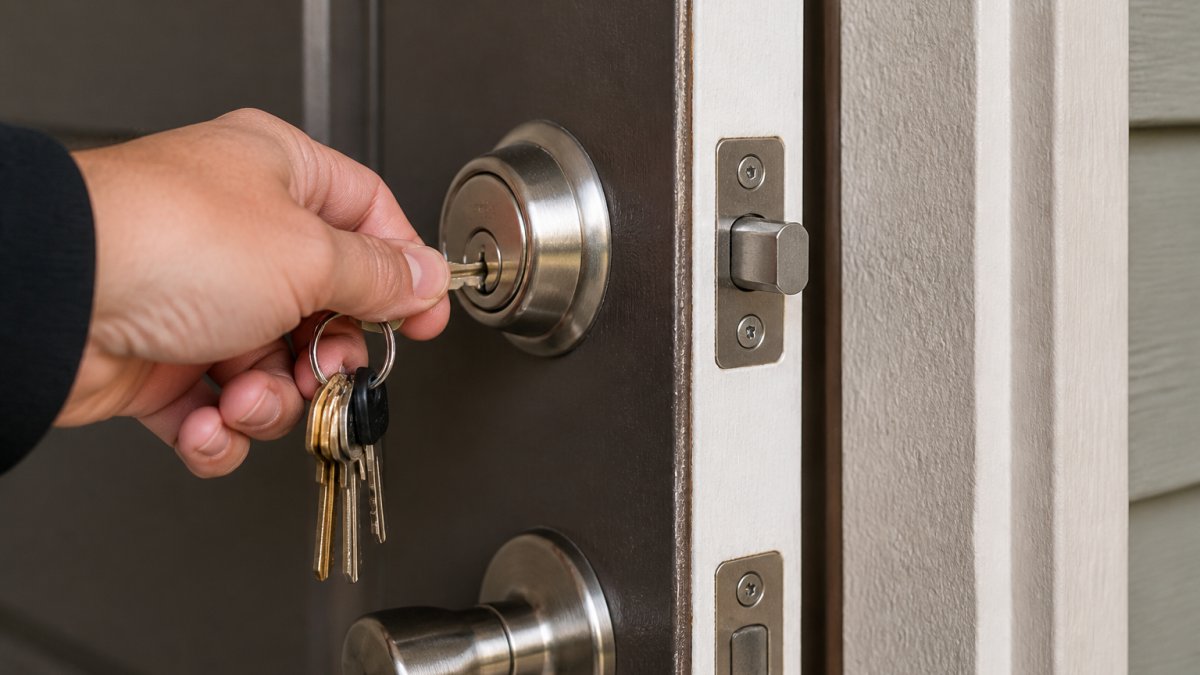
What matters most for security:
- Full throw: The bolt should extend fully when locked, not hang up halfway. Measure from the edge of the door to the tip of the fully extended bolt to check that it extends fully. If it stops short, the bolt is not seating in the strike.
- Solid strike: A reinforced strike plate with long screws that reach the wall framing resists kicking better than a thin plate held by short screws. Check that the strike is anchored into studs, not just the door trim.
- Correct fit: The bolt must line up with the strike without forcing the door. Misalignment shows up as a bolt that slides easily when the door is open but binds when the door is closed.
Diagnosing a Deadbolt That Sticks or Won't Throw
Before you buy hardware or call a locksmith, run a simple open-door versus closed-door test. If the bolt extends and retracts smoothly with the door open, the hardware is fine and the problem is alignment, the strike plate, door sag, or frame. If the bolt binds even with the door open, the problem is inside the lock: dirt, dried lubricant, a worn cylinder, or a damaged bolt.
A deadbolt-specific troubleshooting sequence:
- Test with the door open. Smooth movement points to alignment; binding points to the lock.
- Inspect the bolt and strike. Shiny wear marks show where the bolt is rubbing; a file or strike-plate adjustment can fix minor rubs.
- Check the cylinder. If the key turns hard but the bolt moves freely by thumb-turn, clean and lubricate the cylinder before replacing.
- Check the door and frame. A sagging door or shifted frame can misalign the bolt. Tighten hinge screws and test again.
- Free a jammed bolt carefully. Do not force the key or thumb-turn, forcing can bend the key or damage the cylinder. Try turning the knob while gently pushing or pulling the door to relieve pressure.
Lubricant Choices and Safe Application
Lubricants commonly mentioned for locks include graphite, silicone, and general-purpose sprays. Here is a general comparison:
- Graphite: Can clump and create a gritty residue, especially in humid conditions.
- Silicone spray: Often used for lock cylinders; apply a short burst into the keyway, then work the key several times.
- General-purpose penetrating sprays: Can free a stuck bolt but may leave an oily film that collects dirt. Use sparingly and wipe away excess.
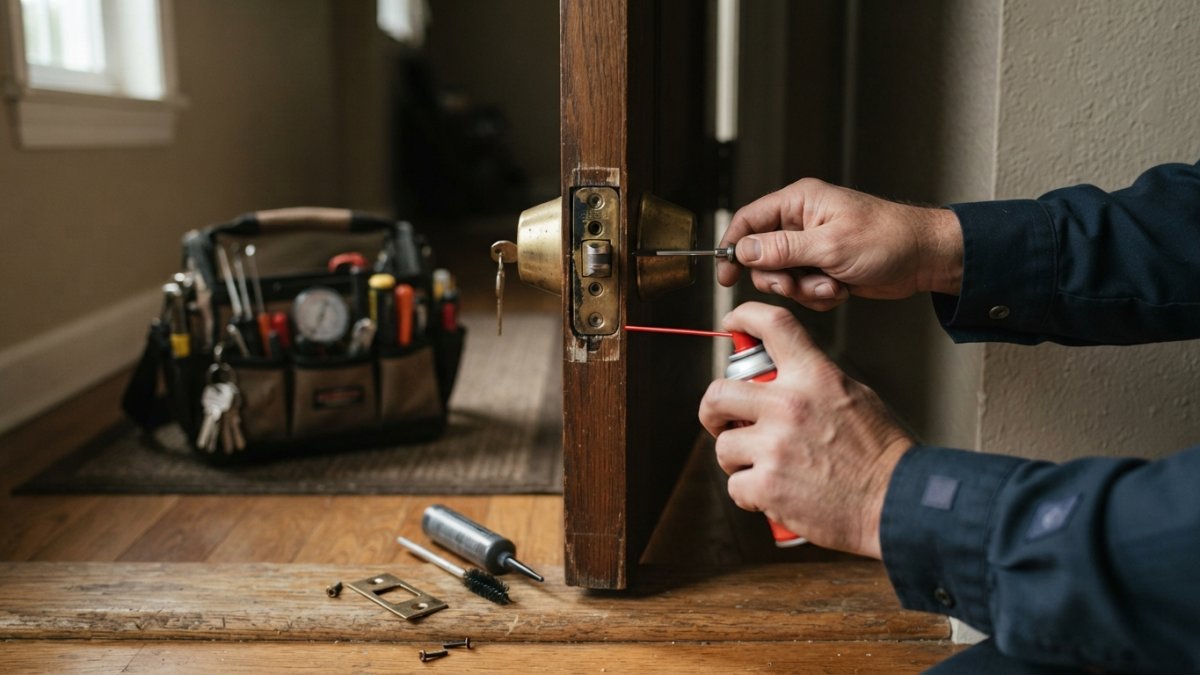
Apply lubricant in small amounts, over-lubricating creates residue that traps dirt and makes the lock worse. After applying, insert and turn the key several times, then wipe the key clean. If the lock still binds after cleaning and lubricating, the cylinder may be worn and need replacement.
When to Stop and Escalate
Do not force a key or bolt if it will not move with reasonable pressure. Stop if the key bends, if the cylinder turns but the bolt does not move, or if you see damage to the strike or frame, those signs point to a failed component or structural misalignment a locksmith should assess.
A deadbolt that doesn't fully throw is a security gap, not a nuisance. If your bolt hangs up, the fix is often alignment or lubrication, not a new lock.
Who Pays and Who Repairs a Broken Apartment Lock
Who pays for a broken apartment lock depends on why it broke. Normal wear and tear is generally the landlord's responsibility, and damage caused by the tenant is usually the tenant's cost. Check your lease and local law for the specifics.
A lock that fails because the door has sagged is generally a building problem rather than a tenant problem. If you need to know what a replacement runs before you hire anyone, our guide on residential lock replacement service cost breaks down the factors that drive the bill.
Separate Lock Failure from Door Misalignment Before You Assign Blame
A reasonable way to decide who pays is to diagnose the cause first. Use the open-door versus closed-door test: if the lock moves freely with the door open but binds when closed, the problem may be alignment, a sagging door, a loose hinge, or a shifted strike plate, which are often building issues. If the lock binds even with the door open, the problem is inside the lock hardware, and responsibility depends on what caused it.
A simple diagnostic sequence before any repair:
- Test with the door open. Smooth movement points to alignment; binding points to the lock.
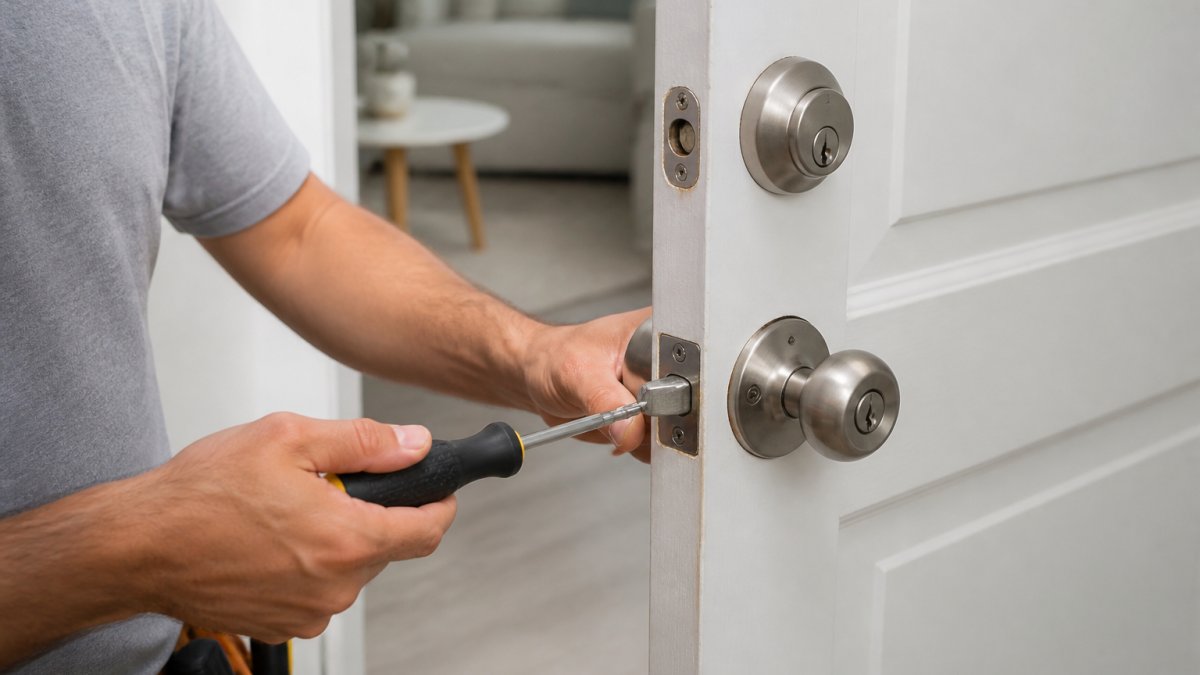
- Inspect the strike plate and bolt. Shiny rub marks show where the bolt is catching; a minor rub can often be fixed by adjusting the strike plate or tightening hinge screws, reversible steps a renter can usually take without replacing hardware.
- Clean and lubricate the cylinder. A small amount of silicone spray and a few key turns often restore smooth movement.
- Check for loose hardware. Tighten hinge and strike plate screws; a door that sags with the seasons may need only an adjustment, not a new lock.
- Document what you find. Photos and a written note of the test results help resolve the payment question with the landlord.
Non-Destructive Fixes to Try First
Before anyone removes or replaces a lock, try the reversible steps. Cleaning and lubricating the cylinder, tightening hinge screws, and adjusting the strike plate cost little and often solve the problem. If the bolt is jammed, do not force the key or thumb-turn; instead, turn the knob while gently pushing or pulling the door to relieve pressure on the bolt.
When to Escalate and Who Typically Pays
Consider calling a locksmith when the key bends, when the cylinder turns but the bolt does not move, or when you see damage to the strike or frame.
If you are a renter, you usually cannot change or repair the lock yourself without written permission. Ask first, document the request, and let the landlord arrange the repair if the cause is building-related.
Getting Your Apartment Locks Compliant and Documented
Compliance comes down to records. Keep a simple log for every unit: the date of the last rekey, who did the work, what hardware was installed, and who holds keys. That log is your defense if a dispute ever arises.
Use this checklist to stay ahead:
- Rekey at every turnover.
- Record the date and the hardware on each unit.
- Keep a written key log and limit master keys.
Lock rules vary by state and city, and getting them wrong can create disputes or leave a renter exposed. Advanced Keys & Locks LLC helps property managers and renters across the DMV area with rekeys, deadbolt checks, and turnover work using certified, insured locksmiths.
Frequently Asked Questions
Are landlords legally required to provide locks on apartment doors?
Landlord obligations for entry-door locks are set by state landlord-tenant law and local building codes, which vary. Check both before assuming a lock is compliant. If a lock is missing or broken, report it in writing and keep a copy.
Can a tenant change the locks on an apartment without permission?
Rarely. Most leases require written approval before a tenant alters or replaces apartment locks, and unauthorized swaps can be treated as a lease violation. Some state rules address tenant lock changes after a domestic violence incident; check your state's rules. Get apartment lock change permission in writing, keep the receipt, and hand over a key if the lease requires it.
Are landlords required to change the locks between tenants?
Some states and local ordinances address rekeying or lock replacement at turnover, and the rules vary. Check the requirements that apply where you live. Ask for written confirmation of the rekey date, and check your move-in inspection report to confirm the hardware was actually changed.
Who is responsible for repairing a broken apartment door lock?
Repair responsibility generally depends on the cause of the damage and what your lease and local law say. Report the problem in writing and keep records. If the landlord does not respond, check with your local housing authority about your options.