 how-to
7 Fixes for a Sticky Deadbolt Lock Without Replacing It
Last Updated: November 1, 2026
Quick Summary
Most sticky deadbolt locks can be fixed without replacement by testing the lock with the door open, then cleaning and lightly lubricating the keyway with silicone or PTFE spray. If the bolt still catches when the door is closed, tighten the strike plate and hinge screws to correct misalignment.
- Open the door and turn the key to tell a lock problem from a door problem.
- Spray about one second of silicone or PTFE into the keyway, then work the key.
- Avoid WD-40 and general spray oils, which collect dust and worsen sticking.
- A strike plate gap of about 1/8 inch or less is usually a screw-tightening fix.
- Lubricate the keyway once or twice a year and tighten screws every six months.
Table of Contents
- Diagnose the Sticky Deadbolt Before You Touch a Screwdriver
- How to Get a Deadbolt Lock Unstuck
- How to Lubricate a Deadbolt Lock (and What to Use)
- When the Key Won't Turn in the Deadbolt
- Deadbolt Misaligned With the Strike Plate
- Tighten Hinges and Check Door Alignment
- Prevent a Sticky Deadbolt From Coming Back
- When to Call a Certified Locksmith
- Frequently Asked Questions
Diagnose the Sticky Deadbolt Before You Touch a Screwdriver
A sticky deadbolt is a deadbolt that resists turning, catches halfway, or needs a jiggle before the bolt slides home. Most sticky deadbolts are not broken. They are usually dirty, dry, or misaligned, and many can be fixed without buying a new lock.
Here is the part most guides skip. Before you spray anything, you need to know which problem you have. A lock problem and a door problem feel identical at the key. They need completely different fixes.
Lock Problem vs. Door Problem: The Key Test
Open the door, then turn the key. This one test splits the diagnosis in two.
- Turns freely with the door open: the lock is fine. Your door or frame has shifted.
- Still stiff with the door open: the problem is inside the lock cylinder or bolt.
- Grinds or catches halfway: debris or a worn part inside the lock.
- Key goes in hard: dirt in the keyway, or a bent key.
Run this test first. It saves you from lubricating a lock that was never the issue.
How to Get a Deadbolt Lock Unstuck
The fastest way to get a deadbolt lock unstuck is to free the bolt before forcing the key. Forcing a stuck key is how keys snap inside cylinders.
Work through these steps in order:
- Turn the knob or handle first. If the latch is holding the door, the deadbolt may not be the culprit.
- Push the door inward or lift it slightly while turning the key. If the bolt moves, you have an alignment problem.
- Check the key. A bent or worn key drags in the keyway. Try a spare.
- Look into the keyway with a flashlight. Dirt, lint, or grit means a cleaning job, not a repair.
- Stop if the key bends. A key that flexes is about to break.
If the key snaps during any of this, stop and follow guidance on how to handle a broken key in a lock before you make it worse.
How to Lubricate a Deadbolt Lock (and What to Use)
The right way to lubricate a deadbolt lock is a small amount of dry lubricant applied to the keyway and bolt, worked in with the key. Less is more here. A flooded lock collects dust and gums up within weeks.
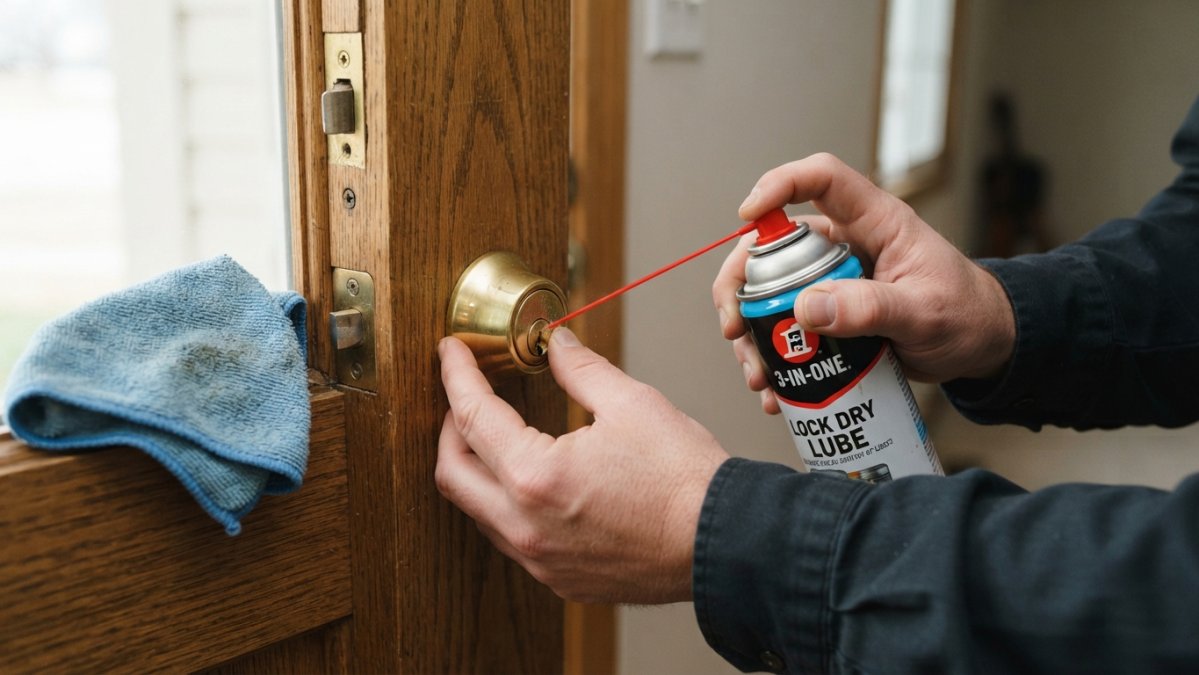
Lubricant choice is where advice online splits. The University of Georgia GreenWay home maintenance guide recommends silicone spray, PTFE spray, or graphite for sticky locks. Other sources push general-purpose spray oils.
| Lubricant | How It Works in a Deadbolt | Best For | Watch Out For |
|---|---|---|---|
| Silicone spray | Leaves a thin dry film on pins and springs | Most home deadbolts | Attracts dust if over-applied; can leave a tacky film on brass |
| PTFE spray | Dry film with very low friction; does not attract grit | High-use locks, exterior doors | Costs more per can; needs a carrier solvent that must flash off |
| Graphite | Dry powder that coats metal surfaces | Dry, dusty climates | Messy; clumps when mixed with moisture or oil |
| General spray oil | Wets and coats parts but stays liquid | Emergency freeing only | Gums up over time; traps lint and grit in the keyway |
Silicone or PTFE spray, applied sparingly, is a common choice for a dry film. Heavy oils can turn sticky and collect dust in a cylinder with small pins and springs.
To apply without creating residue:
- Spray a short burst, about one second, into the keyway. Do not fill the cylinder.
- Insert the key and turn it several times to spread the film across the pins.
- Wipe away excess with a rag, including any spray that lands on the door or trim.
- Test the bolt with the door open before closing it.
- Wait a few minutes for the carrier solvent to evaporate, then test again.
If the lock is still stiff after a light application and a full turn cycle, the problem is probably not lubrication. Go back to the door-open test before you spray again.
When the Key Won't Turn in the Deadbolt
A key that won't turn in a deadbolt usually means one of three things: the wrong key, a dirty cylinder, or a bolt jammed against the strike plate. Try the door-open test first. If the key still won't turn, the cylinder is the problem.
Follow this order:
- Confirm you have the right key for that door.
- Check for a bent key by laying it on a flat surface.
- Clean the keyway with a dry lubricant spray.
- Jiggle the door while turning the key gently.
- Never use pliers on a key.
If the key turns but the bolt won't move, the issue is the bolt or the frame, not the cylinder. That points to the next section.
Deadbolt Misaligned With the Strike Plate
A deadbolt misaligned with the strike plate is the most common cause of a door that needs a shove to lock. The bolt hits the metal plate instead of sliding into the hole. You will see scratch marks on the plate, and the door may rattle when locked.
Look for these signs:
- The bolt scrapes the plate on the way in.
- You must lift or push the door to lock it.
- The deadbolt only works when the door is pulled tight.
- The bolt tip shows a shiny wear mark on one side.
- The strike plate screws are loose or pulled into the wood.
Before you move anything, measure the misalignment. Put a small mark on the strike plate where the bolt tip lands, then close the door and turn the key until the bolt touches the plate. The gap between the bolt tip and the center of the strike hole tells you which direction to adjust. A gap of about 1/8 inch or less is usually a screw-tightening fix. A larger gap points to hinge sag or a shifted frame.
Fixes, easiest first:
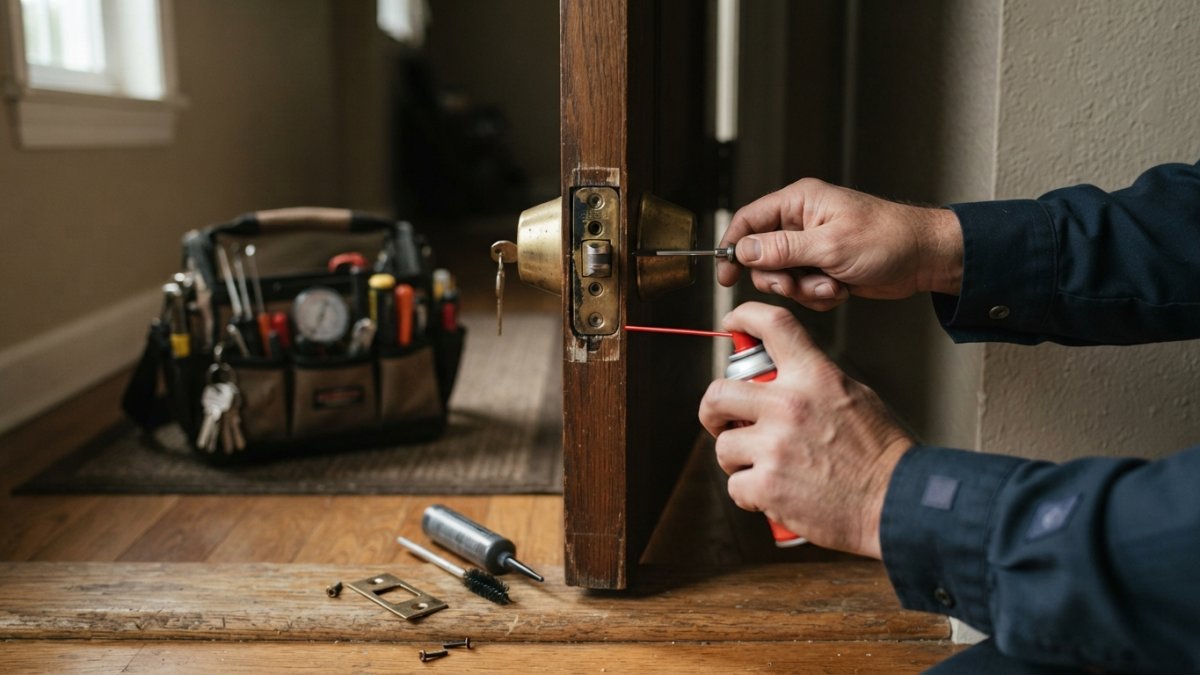
- Tighten the strike plate screws. Loose screws let the plate move under bolt pressure. If the screws spin, replace them with longer ones that bite into the framing.
- File the plate opening slightly if the bolt catches on an edge. Remove metal a little at a time and test after each pass.
- Move the plate up or down if the bolt sits too high or low. Fill the old screw holes with wood glue and a wooden matchstick, then drill new pilot holes.
- Adjust the door hinges if the whole door has dropped. Tighten every hinge screw first, then check the gap around the door.
Do not enlarge the hole in the frame unless you have ruled out hinge sag. A bigger hole hides the problem and weakens the frame.
If the bolt still catches after the plate and hinges are tight, the frame may have shifted. That is a job for a pro, not a bigger hammer.
Tighten Hinges and Check Door Alignment
Door alignment causes more sticky deadbolts than worn locks do. When hinge screws loosen, the door sags, and the bolt no longer lines up with the strike plate.
Check alignment like this:
- Open the door halfway and let go. A door that swings on its own is out of level.
- Look at the gap around the door. An uneven gap means the frame or hinges have moved.
- Tighten every hinge screw with a screwdriver.
- Replace stripped screws with longer ones that bite into the stud.
- Test the deadbolt again with the door closed.
If the door still drags after tightening, the frame may have shifted. That is a job for a pro, not a bigger hammer.
Prevent a Sticky Deadbolt From Coming Back
Prevention comes down to three habits: keep the lock clean, lubricate lightly, and check alignment twice a year.
- Lubricate the keyway once or twice a year with silicone or PTFE spray.
- Wipe grit off keys before inserting them.
- Tighten hinge and strike plate screws every six months.
- Keep the door from slamming, which loosens hinges over time.
- Never hang weight on the door handle.
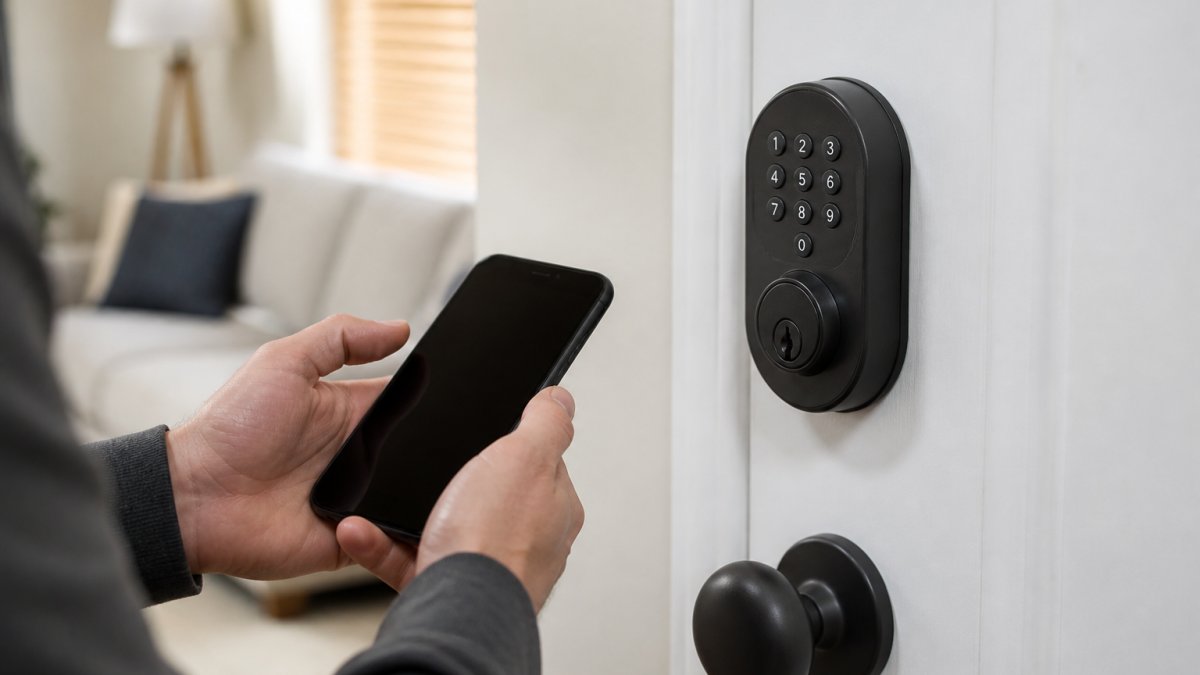
If your lock is old and worn, an upgrade may beat another repair. A no-drill smart deadbolt installation is an option for many doors and avoids repeated fixes on a tired lock.
When to Call a Certified Locksmith
Call a certified locksmith when the lock is damaged, the key is stuck or broken, the cylinder is worn out, or the door frame has shifted beyond a simple screw tightening. Those are the cases where DIY turns into a bigger bill.
Advanced Keys & Locks LLC is a licensed, insured, and certified locksmith company, and it offers upfront pricing with no hidden fees. If you are ready to hire, here is how to find a certified locksmith without hidden fees. Before you book anyone, learn how to verify locksmith certification and insurance so you know who is at your door. If repair no longer makes sense, our residential lock upgrade cost guide covers what to expect.
The ANSI/BHMA lock standards set the durability grades manufacturers build to, which helps when you compare replacement hardware.
Frequently Asked Questions
Can you put WD-40 in a deadbolt lock?
WD-40 can free a stuck deadbolt in the short term, but it is not a true lubricant and leaves a residue that attracts dust and debris, which can make the sticky deadbolt worse over time. Use a dry lubricant such as graphite, PTFE spray, or silicone spray instead. If you already used WD-40, clean the keyway afterward and apply a proper dry lubricant to keep the lock cylinder moving smoothly.
How can you tell whether a deadbolt is misaligned with the strike plate?
Open the door and turn the key or thumb turn to extend the bolt. If the bolt moves freely with the door open but grinds or catches when the door is closed, the deadbolt is misaligned with the strike plate. Look for scrape marks on the strike plate and check whether the bolt hits above, below, or to the side of the opening. Adjusting the strike plate or tightening hinge screws usually fixes the alignment.
What lubricant should you use on a deadbolt?
Graphite, PTFE spray, and silicone spray are the safest choices for a sticky deadbolt lock. Apply a small amount into the keyway and along the bolt, then work the key several times to spread it. Avoid oil-based products that gum up with dust. The University of Georgia GreenWay guide recommends silicone spray, PTFE spray, or graphite for sticky locks, while other sources suggest WD-40, so stick with a dry lubricant for long-term results.
When should you call a locksmith for a stuck deadbolt?
Call a certified locksmith if the key won't turn after cleaning and lubricating, if the key bends or feels loose in the keyway, if the bolt is jammed inside the lock mechanism, or if you see worn components such as a wobbly cylinder. A locksmith can repair or rekey the existing hardware instead of replacing it. For homeowners in the DMV area, Advanced Keys & Locks LLC offers 24/7 service with upfront pricing.
A sticky deadbolt is usually a small fix, not a replacement. When it is not, Advanced Keys & Locks LLC can help. We offer 24/7 emergency service, upfront pricing with no hidden fees, and fully certified, insured locksmiths. Get a quote from Advanced Keys & Locks LLC and get your door locking smoothly again.